Donald Trump once again shifted the focus of a high‑profile appearance toward his political rival, President Joe Biden.
This time during a rally‑style event in Mount Pocono, Pennsylvania, on Tuesday night that was billed as an attempt to reassure voters about economic concerns.
Instead of sticking to a tightly scoped message on rising costs, the former president’s remarks ranged widely, blending familiar attacks on Biden with commentary on immigration, populist grievances, and sharp rhetoric about his critics and opponents.
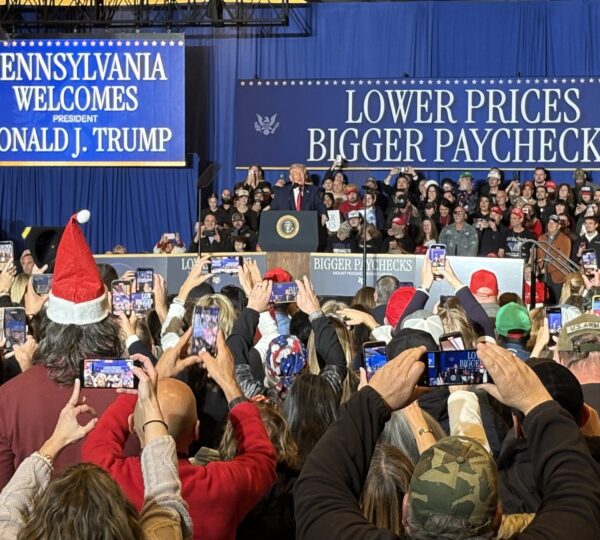
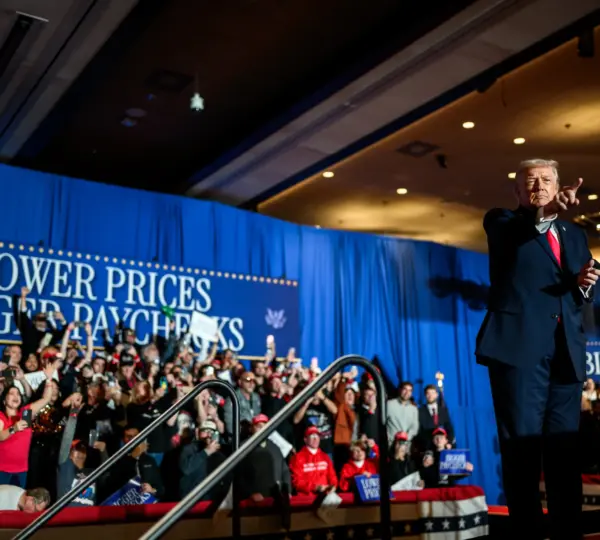
Trump’s Pennsylvania appearance — at the Mount Airy Casino Resort — drew a crowd that party operatives described as supportive and vocal, but it also highlighted ongoing tensions within Republican efforts to address voter concerns about inflation, affordability, and economic leadership ahead of the 2026 midterm elections.
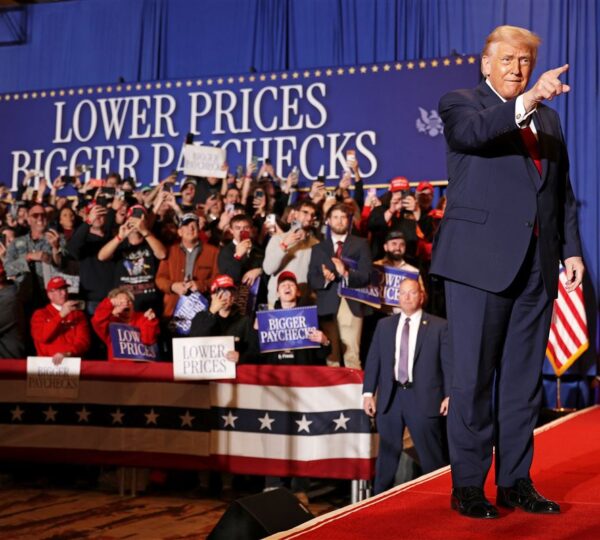
A Rally Meant to Highlight “Affordability” Becomes a Broader Attack
When Trump took the stage Tuesday evening, his opening remarks were framed as part of an “affordability” tour — an attempt to reassure voters that his administration is improving Americans’ economic well‑being.
According to multiple reports, he insisted that inflation was no longer a pressing problem and accused Democrats of weaponizing the term “affordability” to undermine his record.
“They use the word ‘affordability,’ and that’s their only word,” Trump told supporters, dismissing the framing of ongoing cost‑of‑living challenges as a Democratic “hoax” designed to damage his standing with voters.
However, the speech — which stretched to more than 90 minutes — often strayed from its economic premises. Instead of laying out a detailed plan for lowering prices or directly addressing widespread concern among households paying more for basics like food and housing, Trump zig‑zagged into broader political territory.
Repeated References to Biden and New Epithets
Trump devoted a significant portion of his remarks to attacking President Joe Biden, reviving and reinventing long‑used epithets.
While he has often referred to Biden as “Sleepy Joe” or “Crooked Joe” in past years, at this rally he tested variations of these nicknames while addressing crowd reactions during the event.
In one anecdote, Trump described an informal poll he claimed to conduct among attendees — offering the choices “Sleepy Joe” and “Crooked Joe” — and stated that the crowd’s reaction made traditional polling unnecessary in measuring his popularity.
He wrapped the comment in profanity and bravado, drawing laughter but little substantive focus on the rally’s stated economic theme.
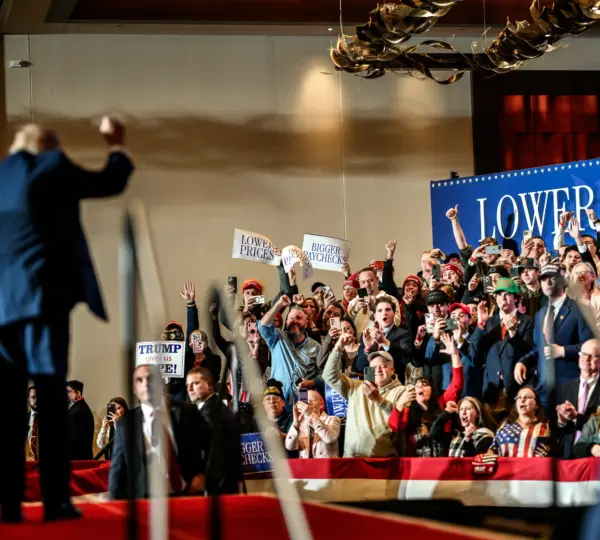
This blend of personal jabs and rhetorical flourishes exemplified how Trump’s speeches often shift away from narrow policy arguments toward broader, personality‑driven political theater.
Immigration, Foreign Nations, and Controversial Remarks
Although Trump had been expected to concentrate on economic issues, the conversation turned quickly to other politically charged topics — particularly immigration and national identity.
Multiple news outlets reported that Trump made remarks about immigration from certain countries that were widely condemned as offensive.
In his speech, he was reported to describe migrants from places like Afghanistan, Haiti, and Somalia in disparaging terms, echoing earlier comments that sparked controversy.
In addition to immigration, Trump also took aim at Democratic Representative **Ilhan Omar — a frequent target of his rhetoric — touching on her background in a manner critics called xenophobic and misleading.
These remarks diverted attention from the economic message the event was supposed to deliver, aligning more with the divisive, culture‑war themes that have defined Trump’s public appearances in recent years.
Economy, Inflation, and “Hoax” Messaging
Trump’s discussion of the economy mixed assertions of progress with dismissals of the severity of ongoing issues affecting many American households.
He reiterated that his administration has delivered lower prices in certain areas and pointed to stock market gains and wage growth as evidence of economic strength.
At the same time, he downplayed the lasting impact of inflation, describing concerns over high costs as exaggerated or politically motivated.
Nonetheless, independent polling and news reporting indicate that voters continue to express skepticism about Trump’s economic leadership.
In recent national surveys, only about 31% of adults approve of Trump’s handling of the cost of living, a figure that has declined in recent months as concerns about inflation and everyday expenses remain widespread.
Analysts also note that a message dismissing or mocking voter economic anxiety — especially by labeling affordability concerns a “hoax” — carries political risk, particularly in competitive districts where cost‑of‑living issues are top priorities for households.
Acknowledging High Prices Without Full Policy Detail
While Trump continued to blame Democrats for elevated prices, his remarks included an unusually explicit acknowledgment from his team — and from some segments of his own rhetoric — that prices are indeed high.
Leaders close to the administration and independent reporting suggest that Trump no longer categorically rejects all affordability critiques but frames them within broader political arguments.
For example, he and his allies have highlighted increased investment, wage trends, and lower prices for certain commodities as evidence of progress, while insisting that Democrats are responsible for earlier price spikes.
Still, much of Tuesday’s commentary lacked the granular policy details that economists say would be necessary to truly reassure voters worried about rising grocery, housing and energy costs.
Off‑Script Moments, Teleprompter Jabs, and Rally Style
The speech also included lighter — and at times odd — moments that have become hallmarks of Trump’s rallies.
At one point in the address, Trump openly mocked the use of teleprompters, saying he had “haven’t read practically anything off the stupid teleprompter,” even as his speechwriters were lauded for crafting “fine speeches.”
He also joked about his Chief of Staff, Susie Wiles — whom he quipped shares his last name — crediting her with encouraging him to return to rally‑style appearances and keep the momentum going.
Some of these sidesteps added an element of spontaneous energy to the event, but they also pulled the discussion further away from the core economic issues that were supposed to anchor the rally.
Political Context: Battleground District and Midterm Stakes
Tuesday’s rally took place in a district that has become politically significant in recent elections. The event was held in Monroe County, Pennsylvania, which played a key role in the 2024 presidential election and now is considered competitive for the 2026 midterms.
Party strategists on both sides view nearby congressional contests as critical in determining whether Republicans can maintain control of the House of Representatives.
This backdrop likely influenced the decision to stage the event as a rally rather than a traditional policy speech, a tactic the White House says will be repeated as part of ongoing efforts to energize voters and counter Democratic narratives.
At the same time, recent off‑cycle election results in states like New Jersey, Virginia and Georgia — where economic concerns played a central role in Democratic victories — have shaped Republican fears that inadequately addressing issues like affordability could jeopardize their electoral prospects.
Reactions and Broader Impact
Reactions to the event have been mixed and intense.
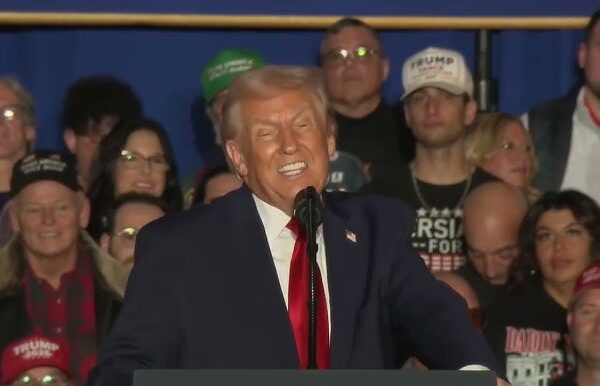
Republican supporters at the rally appeared enthusiastic, chanting slogans and cheering Trump’s commentary on immigration and political opponents.
But commentators and critics, both inside and outside the GOP, have highlighted the speech’s uneven messaging and departures from core policy discussion.
Democratic leaders criticized Trump’s remarks on immigration and racialized rhetoric, calling them divisive and unhelpful in addressing pressing economic issues.
Some pointed out that shifting back and forth between dismissing inflation concerns and blaming past administrations confuses, rather than clarifies, the administration’s economic narrative.
Meanwhile, commentators noted that Trump’s continued focus on Biden underscores the ongoing political rivalry at the center of national discourse, even as the midterms approach and broader policy debates over the economy and governance intensify.
Conclusion: A Rally That Reflected Larger Challenges
President Trump’s Tuesday night appearance in Mount Pocono was intended to reassure voters and clarify his economic message, but by repeatedly veering into attacks on Democrats, commentary on immigration, and personal jabs at rivals, the event underscored the difficulties the administration faces in balancing political theater with substantive policy communication.
As the 2026 midterm elections draw closer, Trump’s approach — blending economic defense with rhetorical aggressiveness — is likely to remain a feature of his public engagements, shaping not just how voters perceive his leadership but also how both parties engage on the most pressing issues facing the country.