
The political landscape in the United States has once again been engulfed in controversy following remarks made by Representative Ilhan Omar (D-MN) concerning the late political activist and commentator Charlie Kirk.
Omar’s statements, which quickly gained widespread attention and drew significant criticism, prompted former President Donald Trump to publicly call for her impeachment.
He described her comments as entirely inappropriate and “out of line,” sparking renewed debates about political decorum, accountability, and the limits of free speech.
Background on the Controversy
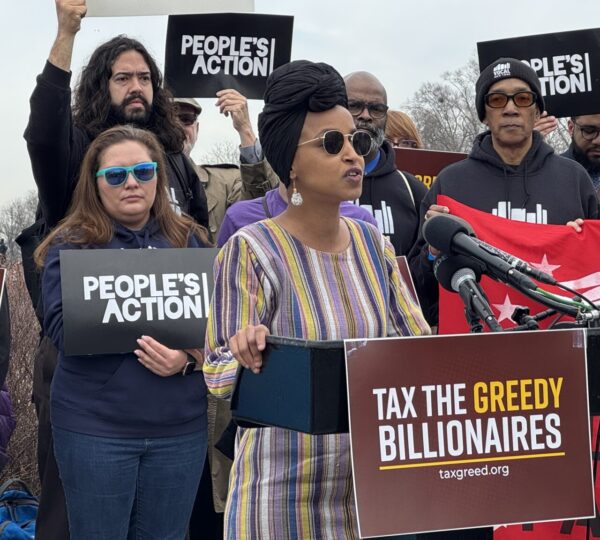
The controversy began when Representative Omar gave an interview to progressive news outlet Zeteo.
During the interview, she suggested that public narratives about Charlie Kirk were overly simplistic, portraying him as a model of civil political discourse while ignoring statements and actions he had made over the past decade.
Omar stated, “There are a lot of people who are out there talking about him just wanting to have a civil debate.
There is nothing more effed up, you know, like, than to completely pretend that, you know, his words and actions have not been recorded and in existence for the last decade or so.”
Shortly after the interview, Omar reposted a video claiming, “Don’t be fooled, these people don’t give a single sht about Charlie Kirk.
They’re just using his death to further their Christo-fascist agenda.”* These remarks triggered strong backlash from political opponents, who accused her of politicizing a sensitive and tragic event.
Representative Nancy Mace (R-SC) publicly condemned Omar, stating, “Charlie Kirk was a lifelong advocate for freedom of speech, civil political discourse, and the political engagement of youth.
One day after the assassination of Charlie Kirk, Representative Ilhan Omar gave an interview in which she smeared Charlie Kirk and implied he was to blame for his own murder.”
Trump’s Public Response
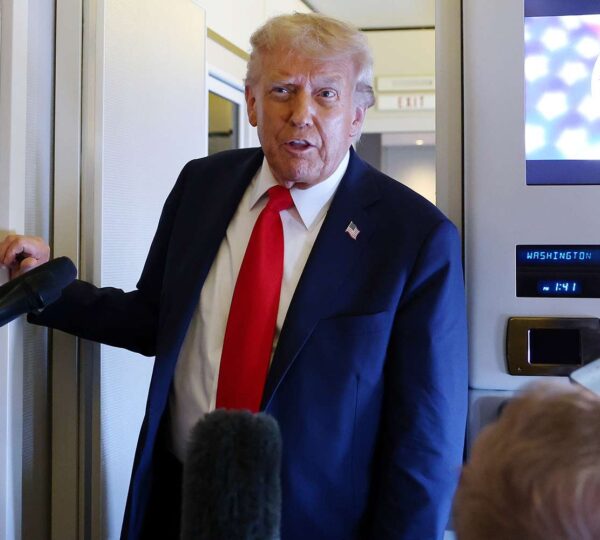
Former President Donald Trump addressed the controversy publicly while aboard Air Force One.
He described Omar’s remarks as “absolutely terrible” and called for swift action to remove her from Congress.
Trump emphasized, “I think [Ilhan Omar is] terrible. I think she should be impeached.
I think she’s terrible.” In his comments, he criticized Omar for focusing on American governance despite her Somali origins, suggesting that Somalia lacks the basic governmental infrastructure present in the United States.
He added, “I love these people. They come from a place with nothing, nothing, no, anything, and then they tell us how to run our country.
Now I think she, if she got, if she got said, since that’s great, if she got impeached, that’s even better.”
Trump framed the impeachment call not only as a response to Omar’s remarks but also as political retaliation, citing his own experiences with impeachment.
“They impeached me twice for nothing, and they impeached me knowing the Republicans are on my side, so they knew it was just—but they impeached me, but she should be impeached,” he stated.
Social Media and Public Reaction
Omar’s comments and Trump’s response reignited debates over the limits of political speech, accountability, and the responsibilities of elected officials when commenting on sensitive matters.
Social media quickly became a battleground, with reactions spanning from outrage to support.
Many critics argued that Omar’s remarks were insensitive, inappropriate, and politically harmful, particularly in the immediate aftermath of a tragic death.
They warned that such statements risk further polarizing public opinion and undermining confidence in political institutions.
Supporters of Omar defended her right to critique public figures and expressed concern about the influence of political narratives that oversimplify or sanitize the actions of influential individuals.
Some emphasized that critical discussion, even when controversial, is a vital component of democratic dialogue.
News outlets, political commentators, and opinion writers also weighed in.
Analysts debated whether Omar’s comments crossed ethical boundaries and discussed the potential consequences for her political career.
Some commentators stressed that while Trump’s call for impeachment was largely rhetorical, it could influence public perception and further intensify partisan tensions.
Political and Legal Considerations
From a legal perspective, any attempt to impeach a sitting member of Congress is highly complex.
Under U.S. law, the House of Representatives holds the exclusive power to initiate impeachment proceedings, and the process requires significant evidence of misconduct.
While Trump’s statements highlight political outrage and rhetorical positioning, they do not constitute formal action.
However, they can fuel partisan debates and shape media coverage, potentially affecting Omar’s public image and future legislative influence.
The situation underscores the delicate balance elected officials must maintain: exercising free speech, advocating for critical perspectives, and respecting ethical norms of public discourse.
Comments on sensitive topics, especially those involving the death of a prominent figure, can have far-reaching implications for political careers, public debate, and national discourse.
Broader Implications
The incident illustrates several key trends in contemporary U.S. politics:
- Heightened Polarization: Public figures’ statements, especially when amplified by social media, can rapidly polarize audiences and create intense political conflicts.
- The Role of Media: News outlets and digital platforms play a critical role in shaping public perception, often framing controversial statements in ways that intensify reactions.
- Political Strategy: Calls for impeachment, even if rhetorical, serve as strategic tools to energize supporters, apply pressure to opponents, and influence broader political narratives.
- Freedom of Speech vs. Accountability: Elected officials are continually navigating the tension between exercising their right to free expression and maintaining accountability to constituents and ethical standards.
Conclusion
In the wake of Charlie Kirk’s death, the remarks made by Rep. Ilhan Omar have sparked a complex, multi-layered political debate.
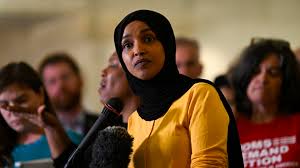
Former President Trump’s call for her impeachment adds an additional dimension, highlighting the tension between political accountability, personal responsibility, and the protections afforded by free speech.
This episode demonstrates the influence of public statements in modern politics, the rapid amplification of controversy via social media, and the ongoing challenges elected officials face in balancing honesty, critique, and decorum.
As discussions continue in Congress, in media circles, and across public platforms, the situation serves as a clear example of the scrutiny and challenges public figures endure in a highly polarized political environment.