
Donald Trump sparked widespread confusion and a flurry of online reactions after claiming that European countries “want him to lead them”.During an unusual and widely discussed speech at the White House Congressional Ball on December 11, 2025.The remarks, which immediately circulated across social media platforms and news outlets, drew scrutiny from political commentators, foreign policy analysts, and the general public alike, with many questioning both the accuracy and intent behind his statement.The Congressional Ball, a long-standing White House tradition held each December, brings together members of Congress, senior administration officials, diplomats, and their families to celebrate the holiday season, typically featuring formal speeches, ceremonial acknowledgments, and lighthearted holiday greetings.Trump’s speech, however, diverged sharply from these norms, focusing extensively on his personal achievements, policy accomplishments, and international influence.
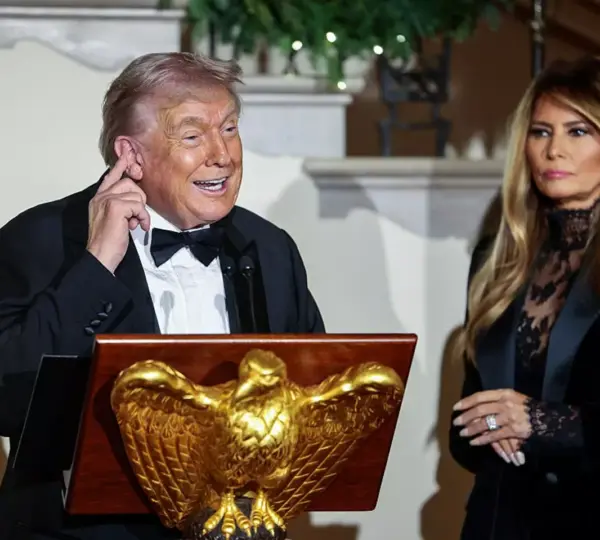
According to reporting from The Independent and other major outlets, Trump began his remarks by extending holiday greetings to the assembled guests, wishing them a “Merry Christmas” and a “Happy Hanukkah,” before quickly pivoting to a lengthy monologue detailing what he described as the extraordinary success of his administration in multiple areas.Throughout the speech, Trump repeatedly emphasized what he characterized as unprecedented economic growth and foreign investment in the United States under his leadership.“We already have more than $18 trillion, and I believe by the end of the year it will exceed $20 trillion,” Trump told the audience.
“That’s more than any country has ever had, anywhere in the world—by four times.”He contrasted these figures with what he described as underperformance by the Biden administration, claiming that the previous administration had attracted less than $1 trillion in investment over four years.Trump framed these comparisons not as partisan attacks but as factual observations, asserting that he was not seeking hostility, but merely stating the reality of the economic data as he saw it.However, the portion of the speech that captured the most attention was Trump’s claim regarding European countries.
“European countries are saying that your president might as well be the leader of Europe,” he stated, emphasizing the respect he claimed European nations afforded to the United States under his administration.“They listen to us, and they respect us like never before. We’re going to work very hard.”
Trump used this statement to underline his long-standing narrative of American strength on the world stage, positioning his leadership as pivotal not just for the United States but for international relations broadly.He also reiterated familiar themes regarding U.S. global influence, suggesting that his administration had repaired or strengthened relationships abroad while countering what he described as a history of the United States being “taken advantage of” by other nations.
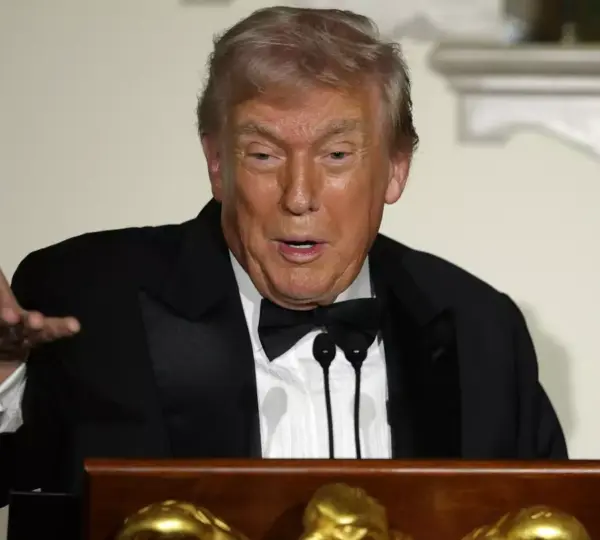
“We get along with them. We want to get along with as many nations as possible,” Trump said. “But we’ve been ripped off by a lot of them for a very long time.”These remarks immediately triggered a wave of responses on social media.
Clips of the speech circulated rapidly, leading to debates among users across the United States and Europe. Many were incredulous at the claim that European nations viewed Trump as a de facto continental leader.
One sarcastic Twitter user commented, “After countless trips to France since this guy came to power, every French person I meet just says, ‘What is America doing?’” Another commenter from the United Kingdom echoed the skepticism, writing, “Same here. What on earth is he talking about?”
Others speculated that Trump’s statement reflected a defensive posture in response to recent polling and media reports suggesting that many Europeans view the United States as a potential threat to regional security, particularly in light of ongoing tensions with Russia, military spending disparities, and diplomatic challenges in areas such as climate policy and migration management.
Humorous responses were also abundant. One American joked, “Great. When can we drop him off in Europe?” while another social media user dismissed the claim outright, suggesting that Trump’s remark revealed “emperor fantasies” rather than factual reality.
Commentators across political and media spectrums noted the juxtaposition of Trump’s comments with longstanding European perspectives, highlighting that major EU nations such as Germany, France, and Italy have robust domestic and international political priorities that do not include seeking leadership from an individual U.S. politician.
Analysts observed that while the United States maintains a prominent role in NATO and global diplomacy, the idea that European countries would view Trump personally as their “leader” is not grounded in any verifiable evidence, reflecting instead a rhetorical flourish characteristic of Trump’s public speaking style.
Trump’s comments came on the heels of an interview with Politico in which he sharply criticized several European leaders.
He described them as “weak” and “decaying,” particularly in regard to handling migration issues and resolving the ongoing war in Ukraine.
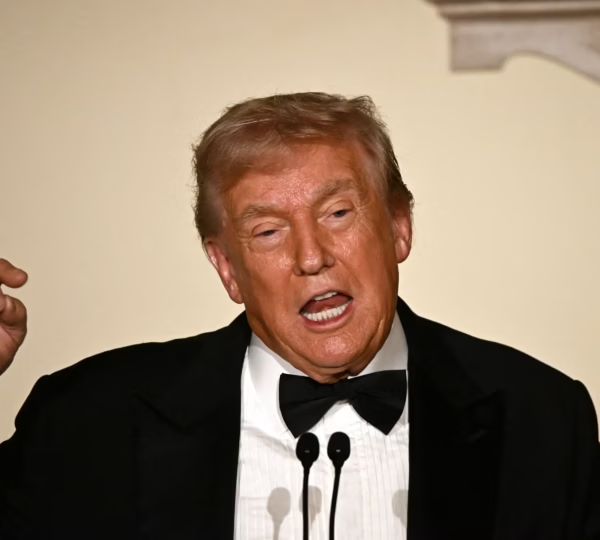
“I think they’re weak,” Trump said in that interview. “They want to be politically correct. They don’t know what to do. Europe doesn’t know what to do.”
He suggested that some European political figures might be more effective if they aligned with his perspectives on governance, diplomacy, and defense.
These remarks, together with his Congressional Ball speech, reinforced a perception among critics that Trump is deeply focused on projecting strength, influence, and personal authority on a global scale, often framing interactions with other nations in terms of dominance, respect, and transactional relationships.
In the broader context of U.S.-European relations, Trump’s claims are especially notable given the complexities of transatlantic diplomacy.
NATO, trade negotiations, climate commitments, and geopolitical coordination on issues such as Russian aggression and migration have traditionally required multilateral cooperation, nuanced negotiation, and adherence to collective decision-making protocols.
While Trump frequently emphasizes American leadership and strategic advantage, suggesting that European nations view him personally as their de facto leader conflicts with the norms of international relations, in which institutional leadership, elected governments, and formal alliances define authority.
Experts noted that Trump’s rhetoric may appeal to domestic audiences and reinforce a narrative of personal influence and success, but it does not reflect formal recognition or endorsement from European states.
Political commentators also highlighted the domestic implications of the speech.
By framing European nations as deferential to him personally, Trump reinforces a narrative of extraordinary leadership and international respect, which aligns with his broader political branding and messaging strategy.
This approach resonates with certain supporters who view Trump as a uniquely capable leader with a record of economic and foreign policy success.
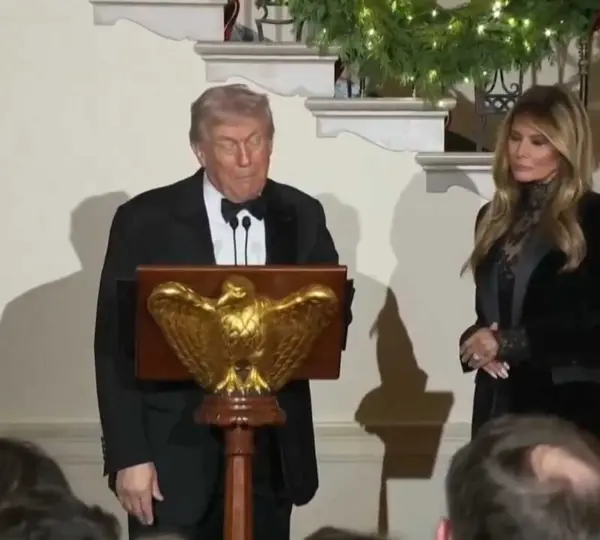
Critics, however, argue that such statements risk undermining diplomatic credibility, exaggerating influence, and misrepresenting complex international relationships, potentially creating confusion or tension among allies.
Reactions from European media and political observers have been similarly varied.
Outlets in France, Germany, and the United Kingdom reported the comments with a mix of incredulity and bemusement, emphasizing that Trump’s assertions do not align with official statements or positions held by national leaders or regional institutions.
Diplomats and policy experts emphasized that U.S.-European relations remain structured around formal agreements, joint commitments, and collaborative institutions, with personal influence from any single American politician playing a limited role in shaping official policy or strategic direction.
Yet, the virality of Trump’s statements demonstrates how rhetoric, particularly when amplified by global media and social platforms, can shape perceptions in both domestic and international arenas, regardless of factual accuracy.
The White House Congressional Ball itself, a traditional gathering designed to combine celebration, reflection, and ceremonial recognition, has historically been a platform for emphasizing bipartisan unity, holiday goodwill, and acknowledgments of service.
Trump’s extended monologue, however, focused heavily on self-promotion, critiques of political opponents, and international relations, diverting attention from the expected themes of gratitude, communal celebration, and lighthearted festivity.
While some attendees reportedly reacted politely and smiled during the remarks, the broader public reaction on social media and news commentary suggested widespread surprise and confusion, particularly regarding the assertion of European admiration and deference.
Trump’s broader rhetoric on foreign policy—characterized by an emphasis on transactional relationships, personal recognition, and economic leverage—provides context for these remarks.
Throughout his presidency and post-presidential appearances, he has repeatedly framed international relationships in terms of respect, influence, and negotiation advantage.
The Congressional Ball comments exemplify this style, merging economic claims, critiques of previous administrations, and personal assertions of leadership in a single, extended address.
Observers noted that the combination of economic figures, comparisons with the Biden administration, and the claim about European nations creates a distinctive narrative, blending factual statements with hyperbolic claims and personal interpretation.
Social media responses reflect the spectrum of engagement with Trump’s statements.
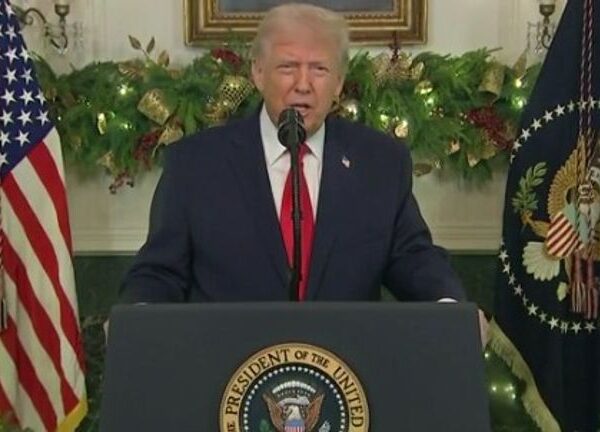
While some users expressed humor and sarcasm, others engaged in serious debate about U.S. foreign policy, transatlantic relations, and the role of personal leadership in international affairs.
Analysts suggest that viral reactions highlight both the global interest in American politics and the influence of individual public figures on public perception, demonstrating how remarks made at ceremonial events can reverberate far beyond their immediate audience.
In conclusion, Donald Trump’s comments at the White House Congressional Ball on December 11, 2025—particularly his claim that European nations “want him to lead them”—sparked global attention, social media debate, and diplomatic scrutiny.
While framed within a broader monologue emphasizing economic achievements, international respect, and criticism of political opponents, the remarks drew both humor and incredulity, illustrating the challenges of interpreting political rhetoric in a highly connected, media-driven world.
Analysts, journalists, and social commentators have emphasized the divergence between Trump’s personal narrative of influence and the formal realities of international diplomacy, highlighting how public figures can shape perception through speech, even when statements lack factual support.
Whether interpreted as self-aggrandizement, rhetorical flourish, or a reflection of political strategy, the remarks underscore the continued fascination, controversy, and global impact of Trump’s public communications, particularly when delivered in high-profile, ceremonial settings such as the Congressional Ball.