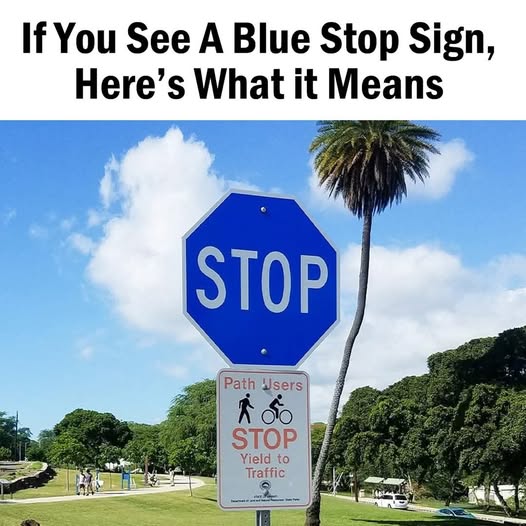
That blue stop sign isn’t a glitch in reality, but it isn’t there by accident either. On public roads in the U.S., stop signs are required to be red by federal standards. Blue versions usually live on private property—business parks, gated communities, or long driveways—where owners are free to bend the visual rules, even if the law doesn’t officially recognize the color.
Yet the responsibility on you as a driver doesn’t change. A blue stop sign still marks a real intersection, with real people, real blind spots, and real consequences. In some places, like Hawaii, blue is even used deliberately to distinguish private signs from government ones. Whether it’s a legal technicality or a local quirk, the safest interpretation is always the simplest: if someone cared enough to put up a stop sign—no matter the color—you should care enough to stop.