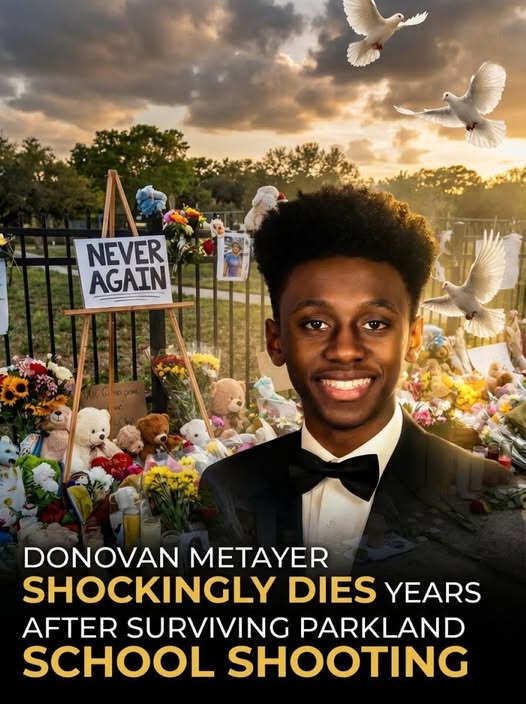
he long-term emotional impact of mass violence is often less visible than the immediate tragedy, yet it can be just as devastating. In December 2025, a former survivor of the 2018 shooting at Marjory Stoneman Douglas High School passed away after years of serious mental health challenges connected to the trauma of that event. His family shared that he had struggled deeply in the years following the attack, reminding the public that recovery from such experiences is rarely linear and does not end when headlines fade. His death has renewed conversations about the lasting psychological effects faced by survivors of large-scale violence.Family members described him as intelligent, warm, and deeply curious, with dreams of building a career in technology. However, after graduating in 2018—the same year the shooting occurred—his loved ones noticed a gradual but significant change. He became more withdrawn and faced increasing mental health difficulties that made pursuing education and steady employment difficult. Over time, he lived with a serious psychiatric condition that required frequent treatment and hospitalization. Despite setbacks, he worked hard to regain stability, earning professional certifications and holding a job that gave him a sense of purpose and independence. His family emphasized that navigating consistent mental health care was challenging, shaped by systemic barriers and limited access to long-term support.The tragedy that altered his life unfolded on February 14, 2018, when a mass shooting took place at Marjory Stoneman Douglas High School in Parkland, Florida. Seventeen people were killed and many others injured in an attack that shocked the nation. The perpetrator, Nikolas Cruz, was later sentenced to life in prison without parole. In response, students and families launched advocacy efforts that led to changes in Florida’s public safety laws, including adjustments to firearm purchasing regulations and school safety policies. While those measures addressed prevention, survivors continued to face personal struggles long after the event.The loss of this survivor has been compared to that of other individuals affected by similar tragedies, including Anne Marie Hochhalter, a survivor of the 1999 shooting at Columbine High School, who passed away earlier this year from natural causes. Hochhalter was remembered for her resilience and dedication to healing, often speaking publicly about recovery, remembrance, and the importance of focusing on life beyond trauma. Families affected by both tragedies have emphasized the need for greater mental health awareness, access to care, and compassion for survivors. By sharing these stories, they hope to honor those lost while encouraging ongoing support for individuals carrying the unseen burdens left behind by violence.
Parkland Tragedy Survivor Donovan Metayer Passes Away at Age 26