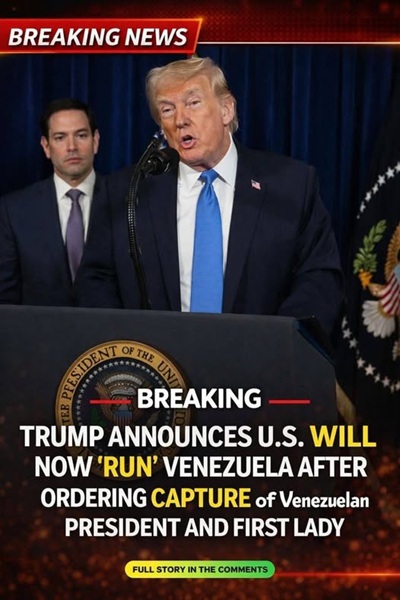
In the predawn hours of January 3, 2026, an extraordinary and unprecedented U.S. military operation unfolded in the heart of Caracas, Venezuela’s capital.
Early reports indicate that the United States conducted extensive air, sea, and ground strikes across the country, targeting military installations.
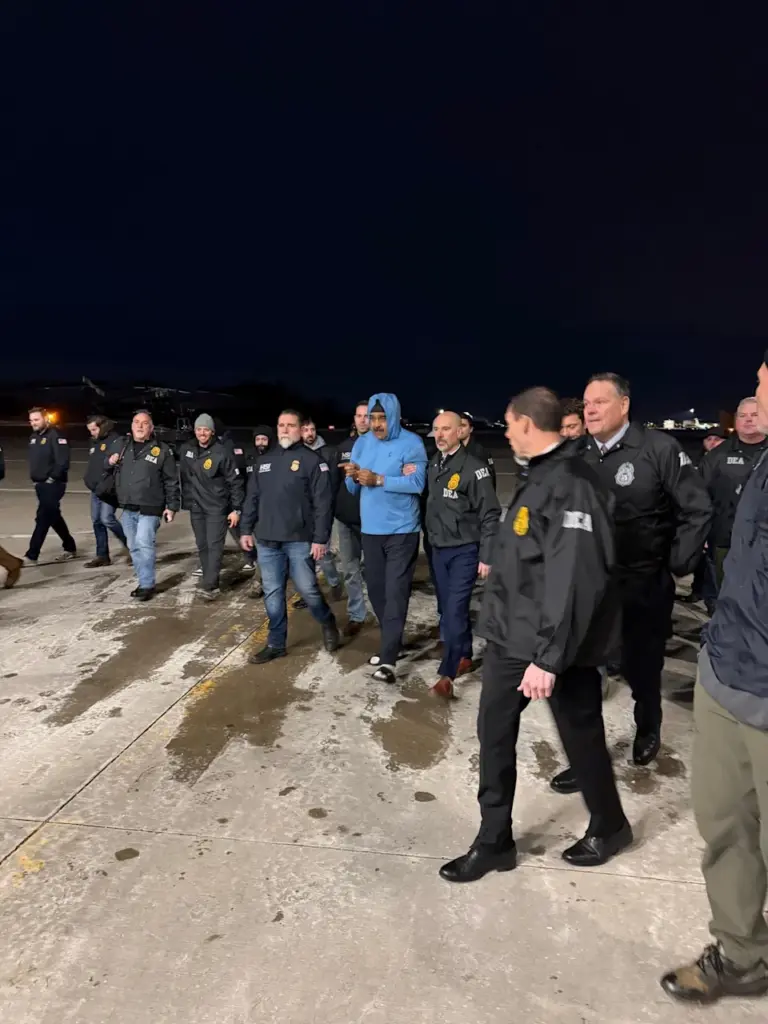
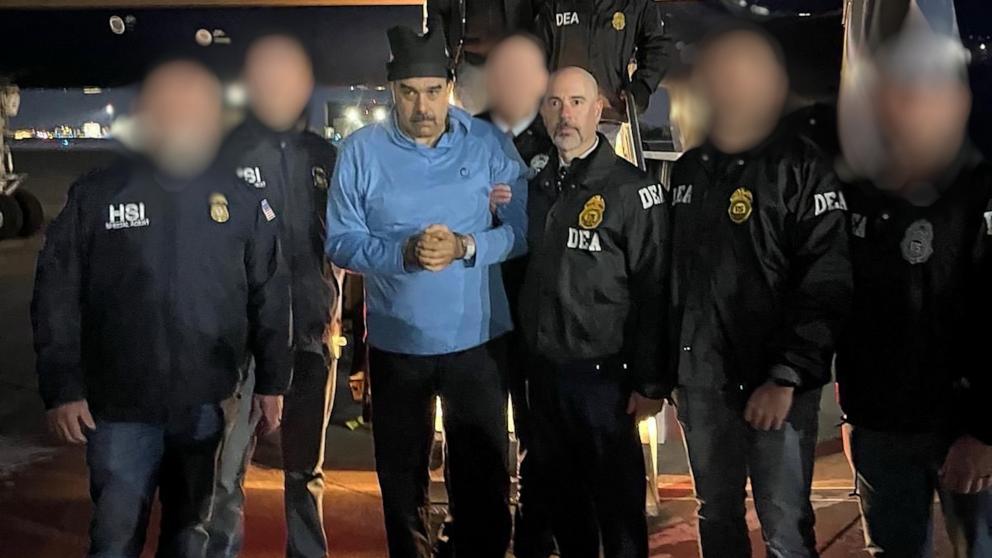
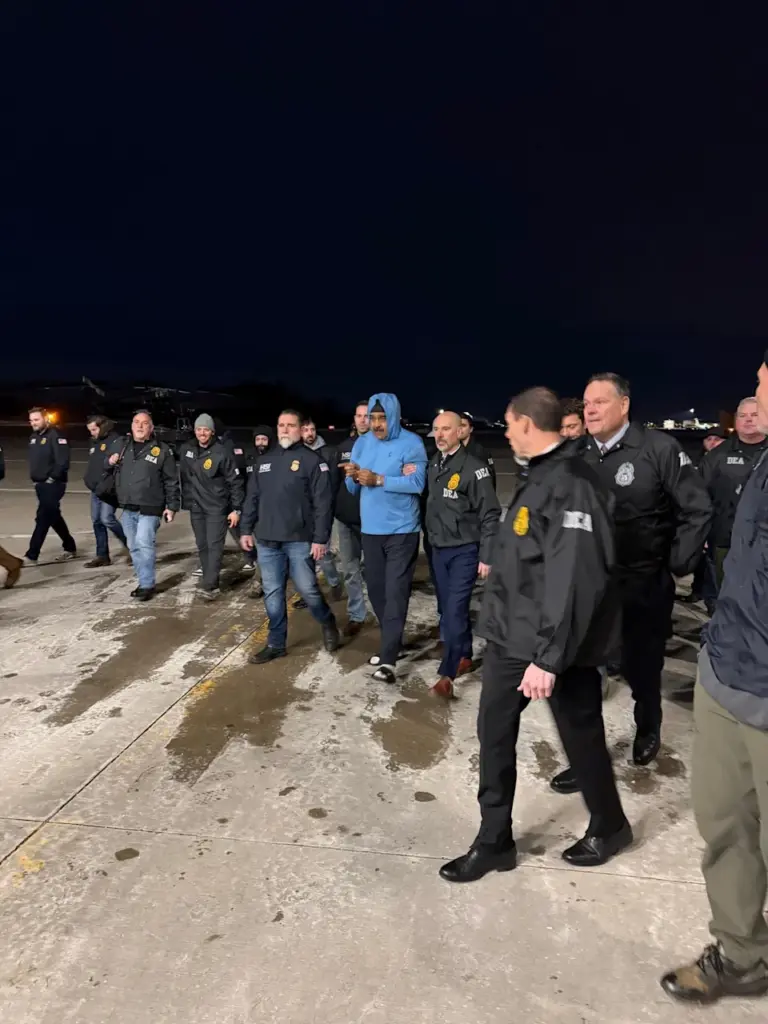
Communications facilities, and strategic infrastructure. The mission culminated in the capture of Venezuelan President Nicolás Maduro and his wife, Cilia Flores, by U.S. forces — who then transported them to the United States to face federal criminal charges, including alleged narco‑terrorism and drug trafficking offenses.
However, independent reporting and official statements paint a more complex picture on the ground. Venezuelan authorities, along with reports from multiple international sources, state that at least 24 Venezuelan security personnel and 32 Cuban military personnel were killed during the strikes, with additional civilian casualties reported. Seven U.S. service members were wounded in the fighting.
The operation — code‑named “Operation Absolute Resolve” by U.S. officials — involved elite American special operations forces alongside coordinated strikes from U.S. military aircraft.
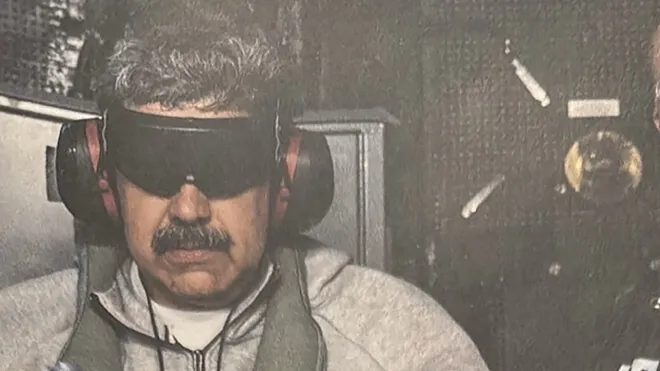
Maduro and Flores were reportedly seized at a safe house in Caracas and flown out to the United States aboard a military aircraft, destined for a federal courthouse in New York City.
Within hours of the operation’s announcement, Venezuelan institutions moved to fill the leadership vacuum. The country’s Supreme Tribunal of Justice recognized Vice President Delcy Rodríguez as interim president, and she was sworn in amid a declaration of national mourning.
Rodríguez has denounced the U.S. operation as an illegal act of aggression and demanded proof of life for Maduro and Flores, who have since appeared in U.S. federal court and pleaded not guilty to the charges they face.
Across Latin America and around the world, reactions were immediate and intense. Government officials in Cuba confirmed military casualties and condemned the U.S. assault. Russia and other Maduro allies characterized the action as a blatant violation of international norms.
At the United Nations, several nations raised objections, warning that unilateral military interventions without Security Council approval undermine global stability.
Even among U.S. lawmakers, the decision has sparked heated debate in Washington. Critics in Congress have questioned whether the administration acted within its constitutional authority, pointing to the War Powers Resolution and the absence of explicit legislative approval for such a sweeping military action.
International law experts also argue the intervention violated article 2 (4) of the United Nations Charter, which prohibits the use of force against another sovereign state without Security Council authorization or a clear basis in self‑defense — neither of which has been demonstrated in publicly available documentation.
President Trump’s announcement was accompanied by statements suggesting the United States will temporarily oversee Venezuela’s affairs, including its vast oil resources.
Trump claimed that up to 50 million barrels of Venezuelan oil could be supplied to the U.S. at market rates, a development that has drawn both domestic praise and international concern over resource sovereignty.
Yet despite assertions of control, experts stress that the United States is not formally administering Venezuela under international law, and the interim government led by Delcy Rodríguez retains authority in Caracas.
The U.S. government has walked back some of the strongest language on “running” the country, clarifying that its role is meant to support a transition rather than replace Venezuelan governance outright.
The capture of Maduro shocked many Venezuelans inside the country and abroad. Those living beneath the flight paths of military aircraft witnessed explosions, communications blackouts, and abrupt disruptions to daily life.
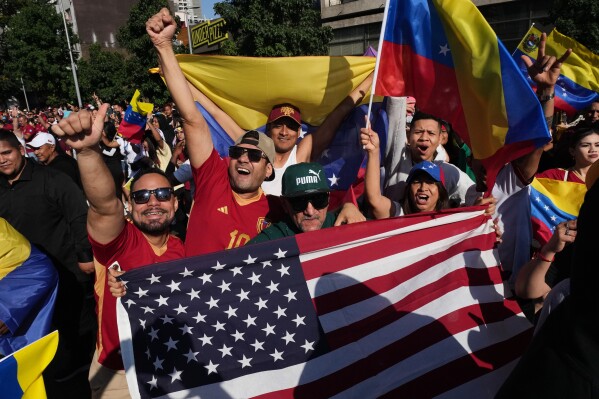
Some Venezuelans see the removal of Maduro as the end of an era marked by economic hardship and political repression dating back over a decade, while others fear the intervention may usher in uncertainty or provoke deeper instability.
International reactions reflect this tension. Some nations condemned the operation outright as a breach of universal norms governing state sovereignty.
Others have called for dialogue and diplomatic engagement to prevent further escalation. Allies of the United States have been cautious in their responses, highlighting concerns about legality and long‑term regional stability.
Meanwhile, Venezuelan streets remain tense in the aftermath of the operation.
Reports indicate that pro‑government groups — known locally as colectivos — have mobilized in response to the power shift, leading to sporadic violence and uncertainty among civilians. Additionally, press freedom organizations have raised alarms about the detention of journalists and restrictions on independent reporting within Venezuela.
President Maduro’s detention and court appearances in the United States have reverberated through international legal and diplomatic circles. His defense has labeled the capture a kidnapping, while U.S. officials insist the operation was justified by longstanding indictments and national security concerns.
Maduro’s legal team has formally pled not guilty in Manhattan federal court, setting the stage for highly publicized proceedings that will likely extend for months or longer.
In the coming days and weeks, global attention will remain riveted on Venezuela’s evolving situation. Key questions loom large: How will Venezuela’s interim government solidify its authority?
Can regional diplomacy avert further conflict? What precedent does this operation set for future international interventions? And how will domestic and international law interpret the legality of such unilateral military action? These unanswered questions underscore the gravity of a night that may well reshape geopolitics in the Americas.
In the hours and days following the operation, the world grappled with the unprecedented nature of the events in Venezuela. The removal of a sitting head of state by a foreign power, particularly one as strategically significant as the United States, sent shockwaves across diplomatic, legal, and military spheres.
Allies and adversaries alike scrambled to interpret the implications of the operation, weighing immediate consequences against long-term strategic considerations.
Within the Western Hemisphere, reactions have been sharply divided. Regional organizations such as the Organization of American States (OAS) called for calm, emphasizing the principles of sovereignty, non-intervention, and the need for a peaceful political transition.
Latin American leaders expressed a mix of concern and caution: countries historically allied with Maduro’s government condemned the U.S. intervention as a violation of international law, while others cautiously acknowledged the opportunity for political and economic stabilization, provided it adhered to legal norms and respected Venezuelan self-determination.
U.S. lawmakers, meanwhile, are engaged in a fierce debate over the legality and oversight of the action. Critics highlight that Trump’s unilateral decision bypassed Congress and violated the War Powers Resolution, which requires that the president seek congressional authorization for military operations extending beyond sixty days.
Supporters, in contrast, argue that the administration was acting to enforce existing criminal indictments against Maduro and to protect U.S. national security interests, citing the president’s constitutional authority as commander-in-chief.
This debate has rekindled broader discussions about executive power in foreign policy, the checks and balances intended to prevent overreach, and the evolving interpretation of constitutional authority in matters of international intervention.
The legal implications are equally significant. Maduro and Flores now face charges in U.S. federal court, including allegations of drug trafficking, narco-terrorism, and money laundering.
These proceedings are expected to be lengthy and complex, involving both domestic and international legal frameworks. U.S. attorneys must build cases that rely on extensive evidence from years of investigation, linking alleged criminal activity to actionable violations of U.S. law.
Meanwhile, the defense team has labeled the capture an illegal kidnapping, asserting that Maduro and Flores were detained without proper adherence to international conventions governing the treatment of foreign leaders.
Legal scholars warn that these trials will test not only the robustness of U.S. criminal statutes in cross-border cases but also the limits of jurisdiction when acting against sitting heads of state.
On the humanitarian front, the operation has generated both concern and uncertainty for ordinary Venezuelans. Airstrikes, military mobilizations, and the disruption of critical infrastructure have contributed to temporary shortages of food, water, and electricity. International aid organizations have issued statements urging calm and warning against further civilian casualties.
Meanwhile, Venezuelan citizens continue to navigate a tense political environment, with heightened security and reports of sporadic street-level clashes between pro- and anti-government factions.
The interim government led by Vice President Delcy Rodríguez has struggled to assert authority across the country, highlighting the challenges of governance in the immediate aftermath of a leadership vacuum.
Energy markets and economic analysts are also monitoring the situation closely. Venezuela, home to one of the largest proven oil reserves in the world, is a country of immense strategic significance.
Trump’s statements suggesting that the United States could manage the transfer of Venezuelan oil resources to U.S. markets have drawn scrutiny. Experts warn that controlling a country’s natural resources—even temporarily—carries enormous geopolitical risks, including potential retaliation, sanctions, or regional instability.
Furthermore, such statements have sparked debate about the ethical and legal considerations surrounding the use of force in relation to resource management.
Media coverage has intensified the global discourse. 24-hour news networks, online outlets, and international agencies have provided real-time updates, offering both verification and speculation.
While Trump framed the operation as a “peaceful liberation” with no U.S. casualties, reporting from multiple international sources has highlighted fatalities among Venezuelan and Cuban security forces. Independent journalists and human rights organizations continue to document the situation on the ground, emphasizing the human cost of military intervention and calling for transparency in both reporting and accountability.
The political fallout extends beyond Venezuela itself. Neighboring countries, including Colombia, Brazil, and Guyana, have issued statements urging diplomacy and warning against regional destabilization.
Cuba, closely allied with Maduro, has condemned the operation in strong terms, citing the deaths of Cuban personnel during the airstrikes and demanding accountability.
Russia, a long-standing ally of Venezuela, has also criticized the intervention, framing it as a violation of sovereignty and international law.
These reactions underscore the global dimension of the operation, highlighting that unilateral military actions—even against controversial leaders—cannot be considered in isolation from their geopolitical impact.
Within the United States, public reaction has been polarized. Supporters hail the operation as a decisive action that removes a corrupt and allegedly criminal leader from power, reinforcing U.S. strength and demonstrating a willingness to act boldly on national security.
Critics, by contrast, decry the bypassing of Congress, the risk to civilian life, and the potential for long-term instability. Analysts warn that public opinion could be shaped not only by immediate outcomes but also by the operational, legal, and humanitarian consequences that emerge in the weeks and months ahead.
Looking ahead, the situation presents complex challenges. Stabilizing Venezuela requires not only political authority but also humanitarian assistance, economic reconstruction, and reconciliation between deeply divided factions. U.S. officials have pledged to support a transitional process, yet critics stress that effective governance must come from within the country and respect international legal norms.
The operation sets a precedent that may influence future U.S. foreign policy decisions, including potential interventions in other nations facing corruption, criminal governance, or humanitarian crises.
Ultimately, the capture of Nicolás Maduro and Cilia Flores represents a historical moment of unprecedented boldness in U.S. foreign policy.
It underscores the capabilities of American military forces, the potential reach of U.S. executive power, and the delicate balance between strategic objectives and legal, ethical, and humanitarian considerations.
For Venezuelans, it marks the beginning of an uncertain and volatile chapter, filled with both opportunity and risk. For the international community, it is a stark reminder that unilateral actions by powerful states can reshape regional and global dynamics in an instant.
And for the United States, it raises enduring questions about governance, oversight, and the responsible exercise of authority on the world stage.
As investigations, prosecutions, and diplomatic efforts unfold, the story of Venezuela in January 2026 will continue to captivate global attention, shaping perceptions of power, sovereignty, and justice for years to come.
For the people of Caracas, Washington, and beyond, the echoes of that night will resonate long into the future, a testament to the stakes, consequences, and human costs of decisive action in an interconnected world.