Former U.S. President Bill Clinton has once again been thrust into the public spotlight, this time in connection with the ongoing controversy…
Surrounding convicted sex offender Jeffrey Epstein. In recent statements issued through his spokesperson.
Clinton has called on federal authorities to release all unredacted documents and records related to Epstein, arguing that selective disclosure and heavy redactions have raised serious concerns about transparency and public accountability.
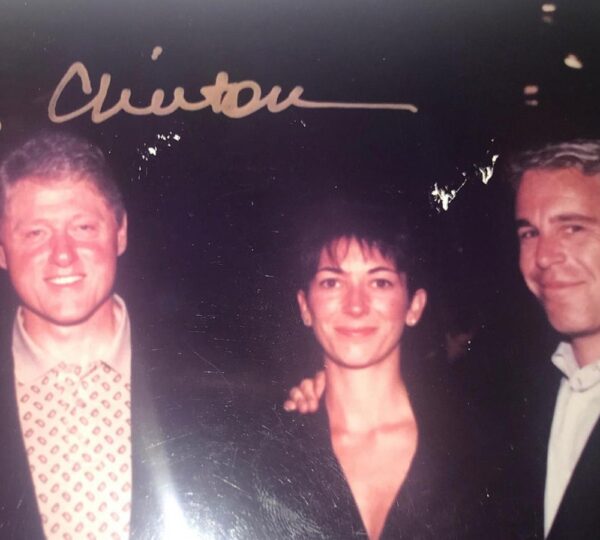
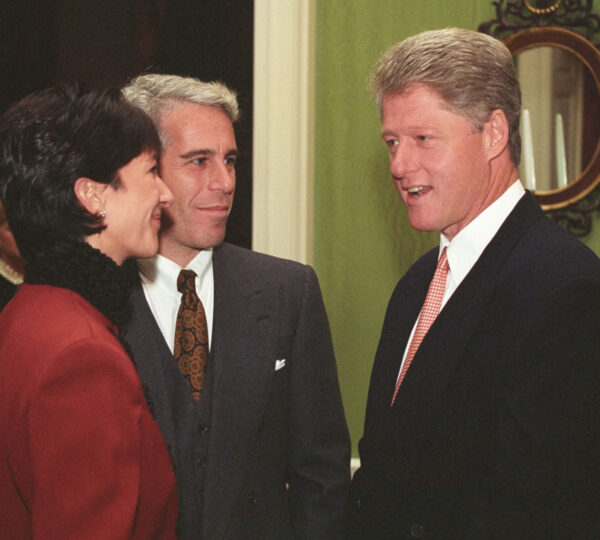
While Clinton himself has never faced allegations or charges in connection with Epstein, his name appears in some of the documents, and photographs linking him to Epstein and Ghislaine Maxwell — Epstein’s longtime associate — have circulated widely over the years.
These appearances have fueled public curiosity and media scrutiny, leading Clinton’s team to advocate for full disclosure to ensure the public receives a complete and accurate understanding of the records.
Background on Epstein Files and Public Interest
Jeffrey Epstein, who died in a federal detention center in 2019, was a financier and convicted sex offender whose social connections spanned politics, business, and entertainment.
His arrest, prosecution, and subsequent death exposed a network of abuse that implicated numerous high-profile individuals, prompting the release of hundreds of thousands of documents detailing his interactions, associates, and alleged criminal activity.
In recent years, nearly 300,000 files related to Epstein’s activities have been released publicly, including court documents, depositions, and investigative reports.
However, much of this material has been heavily redacted, with names, personal identifiers, and critical context blacked out.
While redactions are standard in sensitive legal cases — intended to protect minors, witnesses, and ongoing investigations — Clinton’s team argues that in his case, selective disclosure has created misleading impressions.
Angel Ureña, a spokesperson representing Clinton, emphasized that portions of the released records, including photographs and partial documents, have circulated widely in media outlets and social media platforms.
While these files show Clinton in proximity to Epstein and Maxwell, there are no allegations, charges, or verified claims of wrongdoing against him.
Yet, according to Ureña, the manner in which the files were released creates the appearance of selective protection for certain figures, while raising unnecessary questions about others.
Concerns Over Redactions and Public Perception
Clinton’s team has specifically criticized what they describe as inconsistent redactions within the publicly available Epstein files.

Ureña noted that while the Department of Justice cited legal constraints and privacy concerns as justification for redacting sensitive information, the selective nature of the edits can distort the public’s understanding of the content.
“What has been released so far suggests someone is being protected,” Ureña said in a recent statement.
“President Clinton requires no such protection, and the American public deserves a clear, unvarnished picture of the facts.”
The concern stems from a broader context in which incomplete information can easily be misinterpreted.
Media outlets, social media users, and online commentators frequently speculate on the implications of partial disclosure, sometimes implying connections or improprieties where none exist.
Clinton’s team argues that only full, unredacted release of the documents can address these misconceptions and restore trust in the reporting process.
Historical Context of Clinton’s Relationship with Epstein
Bill Clinton’s connection to Jeffrey Epstein has been widely documented but remains largely social in nature.
Clinton traveled on Epstein’s private jet on multiple occasions during his post-presidency work with the Clinton Foundation and other global initiatives.
Reports suggest that Clinton’s interactions with Epstein were primarily linked to philanthropic activities and travel related to the foundation, not personal or criminal involvement.
Photographs showing Clinton, Epstein, and Ghislaine Maxwell together have circulated online, often generating speculation.
Maxwell, who was convicted in 2022 on charges related to sex trafficking, was a close associate of Epstein for more than a decade.
Despite these associations, no credible evidence has emerged implicating Clinton in illegal activity or in any wrongdoing related to Epstein’s criminal acts.
Nevertheless, in the age of viral social media, appearances in such files can influence public perception, even absent substantiated claims.
This dynamic underscores why Clinton’s team believes that full transparency is critical: the American public should be able to review the documents in their entirety, without selective redactions that could imply guilt by omission.
The Call for Full Disclosure
In response to these concerns, Clinton’s spokesperson, Ureña, has formally requested that federal authorities release all unredacted Epstein-related records, citing the Epstein Files Transparency Act as the legal framework under which such disclosure can occur.
“Only full, unredacted transparency can prevent misinformation,” Ureña said. “Incomplete disclosure allows narratives to form based on what is hidden rather than what is factual.
We believe the public deserves full access to the records so that they can form opinions based on complete, accurate information.”
The spokesperson emphasized that this call is not defensive in nature, but rather a principled demand for fairness.
By making the documents fully available, Clinton’s team hopes to ensure that media coverage, social commentary, and public discussion are grounded in fact rather than speculation.
Public Reaction and Media Coverage
The release of Epstein-related files has long been a source of intense public scrutiny. News outlets, journalists, and independent researchers have sifted through hundreds of thousands of pages of documents to identify patterns, connections, and previously undisclosed information.
While much of the coverage has focused on the criminal activities of Epstein and Maxwell, media commentary has occasionally implicated public figures who appear in photographs or court documents, regardless of context.
Clinton’s team argues that this practice highlights the danger of partial information.
When documents are selectively released or redacted inconsistently, it can appear that certain individuals are being shielded while others are unfairly subjected to scrutiny.
Ureña notes that this problem is exacerbated by the viral nature of social media, where incomplete documents can be shared rapidly and interpreted without nuance.
Legal and Ethical Considerations
The Epstein files are complex, encompassing civil litigation, criminal investigations, and ongoing legal proceedings in multiple jurisdictions.
Redactions are often necessary to protect the privacy of victims, ensure the integrity of ongoing investigations, and comply with federal and state laws.
However, Clinton’s team maintains that redactions should not be so extensive as to misrepresent the content or the context of interactions.
They argue that transparency in this case is not merely a personal request but a broader matter of public trust in government and legal institutions.
The logic is simple: if documents are released partially and inconsistently, it can erode confidence in the judicial process and amplify misinformation.
The Importance of Contextual Accuracy
One of the primary issues raised by Clinton’s spokesperson is the potential for photographs and selective excerpts to create misleading narratives.
For example, an image of Clinton with Epstein and Maxwell, taken in a public or social setting, may be interpreted out of context if accompanying documentation is heavily redacted.
Similarly, excerpts of deposition testimony or communications that remove explanatory details can unintentionally suggest wrongdoing.
Clinton’s team asserts that context matters not just for accuracy but also for fairness. Ureña explained, “The American public deserves to see the whole story.
When pieces are removed or obscured, it undermines both the credibility of the documents and the integrity of public discourse.”
Clinton’s Perspective on Transparency
Throughout this controversy, Clinton himself has not commented extensively on social media or in public interviews regarding the Epstein files. Instead, his office has relied on Ureña and other representatives to articulate the demand for full disclosure.
This approach underscores a commitment to principled, fact-based engagement, avoiding reactionary or defensive rhetoric while emphasizing the broader importance of transparency.
According to his team, Clinton views the partial disclosure of Epstein files as a test case for how sensitive legal information should be handled: responsibly, fully, and with attention to accuracy rather than selective messaging.
Broader Implications for Public Trust
The call for full release of Epstein-related records is not solely about protecting Clinton’s reputation.
It also reflects a larger concern about how government agencies manage high-profile cases, handle sensitive information, and maintain public confidence.
Incomplete or heavily redacted disclosures can have a cascading effect: media outlets, social commentators, and social media users fill gaps with speculation, which then becomes treated as truth in public discourse.
By insisting on full, unredacted transparency, Clinton’s team hopes to set a precedent for accountability and integrity, ensuring that future document releases are complete, accurate, and contextualized.
Next Steps and Legal Considerations
Federal authorities have yet to indicate whether they will comply with Clinton’s request for full disclosure.
The Epstein Files Transparency Act provides a legal mechanism for requesting access, but it remains subject to interpretation regarding what can be unredacted without violating privacy, ongoing investigations, or court orders.
Legal analysts note that balancing transparency with confidentiality is a complex process, particularly in cases involving multiple jurisdictions, criminal allegations, and sensitive personal information.
Nonetheless, Clinton’s team is prepared to pursue all available avenues to ensure that the public has access to complete, factual records, reinforcing confidence in both the documents themselves and the institutions responsible for their release.
Conclusion: Transparency as a Guiding Principle
In summary, Bill Clinton’s call for the full release of Epstein files represents both a personal and institutional concern.
While he has never been accused or charged with wrongdoing, his appearance in the documents has subjected him to public scrutiny amplified by selective redactions.
His team argues that only unredacted transparency can prevent misinformation, protect the integrity of public discourse, and maintain trust in the judicial system.
As the nation continues to grapple with the legacy of Epstein’s crimes, the conversation around transparency, fairness, and accountability remains critical.
Clinton’s demand underscores a central principle: public trust is strengthened when information is complete, accurate, and contextualized, rather than selectively presented.
Ultimately, this episode highlights the challenges of balancing privacy, legal obligations, and public interest in high-profile cases.
For Clinton, the goal is simple: ensure that the public sees the full story, free from misleading redactions, so that discourse is based on fact, not conjecture.