
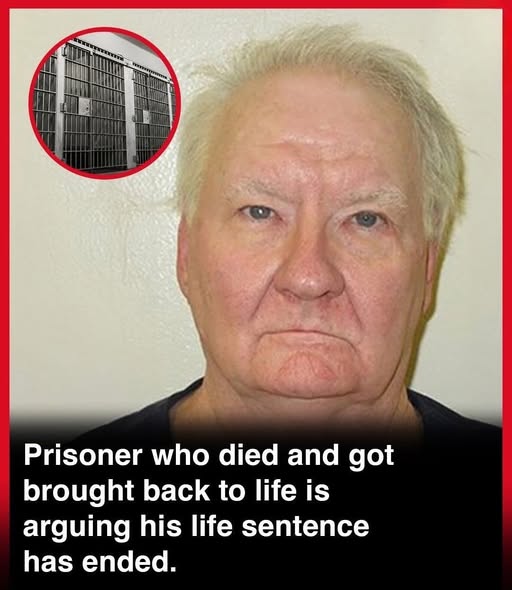
A Unique Legal Argument in the Case of Benjamin Schreiber.In 2015, Benjamin Schreiber, an inmate serving a life sentence without parole in Iowa, found himself at the center of a bizarre and unprecedented legal battle. After suffering septic poisoning, Schreiber’s heart stopped five times, and he was revived each time by medical professionals. Later, he argued that his brief period of death meant he had technically served his life sentence, which, by his reasoning, should have concluded upon his revival. The case raised fundamental questions about the nature of life sentences, the definition of death, and the intersection of legal principles with medical realities.
In this article, we explore Schreiber’s argument, the legal and philosophical implications of his case, and the court’s response to this highly unusual claim. Ultimately, Schreiber’s case offers a fascinating glimpse into how law and medicine intersect in unexpected ways and how the justice system grapples with the complexities of life, death, and punishment.Schreiber’s Story: A Medical Emergency and Legal Challenge
Benjamin Schreiber’s life sentence was handed down after he was convicted of murder in 1997. For years, he spent his time in an Iowa prison, serving his life sentence without the possibility of parole. However, his life—and his legal fate—took a dramatic turn in 2015 when Schreiber contracted septic poisoning, a severe infection that can lead to organ failure and death.Rushed to a hospital, Schreiber’s condition rapidly deteriorated, and his heart stopped five times. He was revived through medical intervention each time, and after a period of recovery, Schreiber’s health improved. Upon regaining his health, Schreiber made a legal claim that, because he had technically died during his medical emergency and had been revived, his life sentence should be considered fulfilled.
Schreiber filed a legal appeal with the Iowa Court of Appeals, arguing that his brief death meant that his life sentence had ended, and he should be released. His argument was simple but extraordinary: Since his heart had stopped beating, he had technically died, and the terms of his sentence—life imprisonment until death—had already been completed. By this logic, Schreiber argued, he was now serving a “new” life beyond his original sentence, and thus, he should be set free.The Legal Implications of Schreiber’s Argument
Schreiber’s argument raised several intriguing legal questions. At its core, the case revolved around the interpretation of what constitutes a life sentence. A life sentence is traditionally understood as imprisonment for the duration of a person’s natural life, with the stipulation that parole or release is not an option. But what happens when someone technically dies, even briefly? Should their legal status be altered as a result?Schreiber’s legal team argued that, since Schreiber had technically died and been revived, he had already fulfilled the terms of his sentence. They suggested that the brief cessation of Schreiber’s heart constituted an end to his life sentence, as death is typically understood as the end of life. According to this reasoning, Schreiber was no longer bound by the legal constraints of his life sentence because, in their view, he had already “served” his time.
However, the counter-argument from the prosecution and legal experts was that the law does not recognize a brief medical death as an actual death in the legal sense. While Schreiber had technically experienced a stoppage of his heart, he was revived and returned to life. Therefore, the argument that he had “served his life sentence” was flawed, as it ignored the fact that he was still alive and still subject to his sentence.The Court’s Response: The Ruling and Legal Precedent
Schreiber’s case was heard by the Iowa Court of Appeals, which ultimately ruled against his argument. In its ruling, the court described Schreiber’s claim as “unpersuasive and without merit.” The court emphasized that a life sentence means imprisonment until death, not until a temporary medical death.
The judges clarified that the law does not view a brief stoppage of heart function, followed by medical revival, as the fulfillment of a life sentence. The court pointed out that the purpose of a life sentence is to ensure that the individual remains in prison for the duration of their natural life, not merely until a temporary medical condition results in a brief cessation of life functions.
Additionally, the court noted that a temporary medical death, followed by revival, does not equate to a legally recognized death. In the eyes of the law, Schreiber was still alive and therefore still serving his life sentence.
While Schreiber’s argument was creative, the court’s ruling reaffirmed the traditional understanding of life sentences: they last until the individual dies, but only in the legal sense, meaning an irreversible death that permanently ends their existence. As such, Schreiber’s brief medical death did not satisfy the conditions of his life sentence, and his appeal for release was denied.
The Philosophical and Ethical Questions Raised
Schreiber’s case brought up significant philosophical and ethical questions about the nature of life, death, and punishment. What does it mean to serve a life sentence? Is the end of a life sentence tied only to biological death, or can other factors, such as medical conditions, be taken into account? Schreiber’s argument posed a challenge to traditional notions of sentencing and punishment, asking the legal system to consider the intersection of medical realities and criminal justice.
While the court’s decision was grounded in legal precedent, it opened up a broader conversation about how the legal system handles medical emergencies, life and death, and the morality of lifelong incarceration. Schreiber’s case, though unusual, highlights the complexities of the human experience and the ways in which law and science interact in unexpected ways.

Legal Precedents and the Importance of Clear Definitions
The court’s ruling relied heavily on legal definitions of “death” and “life imprisonment.” In criminal law, a life sentence is typically understood as a punishment to be served until the person dies. This has been the standard in most legal systems around the world for centuries. However, Schreiber’s case raises the question of how such definitions should evolve in light of advancements in medical science. With modern technology, people can be revived after being declared clinically dead, which challenges the traditional understanding of what constitutes death.
While Schreiber’s argument was rooted in a legal interpretation of the sentence, it reflects a growing trend in legal debates regarding the intersection of medical science and the law. As medical advancements continue to improve, particularly in fields like resuscitation and organ transplants, the question of what constitutes “life” and “death” will continue to be a topic of debate in both courts and society.
Conclusion: A Unique Case in the Intersection of Law and Medicine
Benjamin Schreiber’s legal battle is a fascinating example of how the boundaries between law, medicine, and morality can blur in unexpected ways. While his argument was ultimately rejected by the Iowa Court of Appeals, the case highlighted the complexities of interpreting life sentences and the evolving nature of legal definitions in the face of modern medical technology. Schreiber’s creative legal claim sparked a conversation about the relationship between life, death, and justice, and how these concepts must be carefully considered in an ever-changing world.
Though Schreiber’s case did not result in the release he sought, it serves as a reminder of the ongoing conversations about justice, medical advancements, and how the law adapts to new challenges. The case underscores the importance of clear legal definitions and the need for courts to consider both medical and philosophical perspectives when interpreting the law.