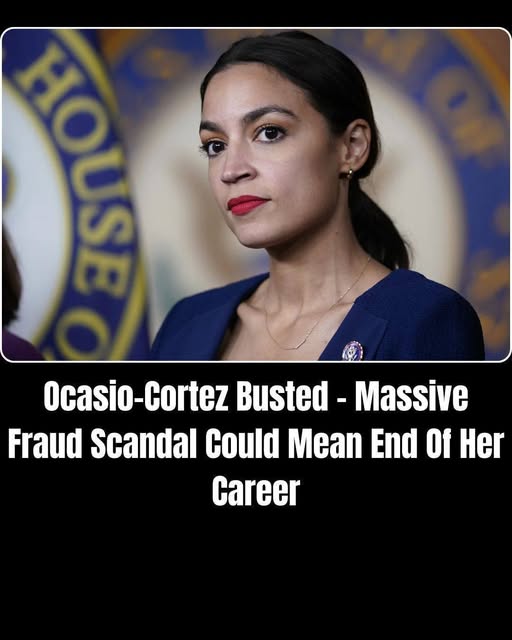
Thanksgiving in New York City, traditionally a time for generosity and community support, took an unexpected turn this year after a holiday fundraising appeal associated.
With Representative Alexandria Ocasio-Cortez sparked a wave of controversy. While donors initially believed they were contributing to a campaign.
Designed to provide meals to struggling families during the holiday season, critics have argued that the campaign’s fundraising mechanisms funneled money primarily into a political operation rather than direct food assistance.
The fundraising appeal, delivered via email to supporters in early November, was presented with the hallmarks of a charitable drive. The messaging emphasized the spirit of Thanksgiving, evoked imagery of families sharing holiday meals, and highlighted the pressing need to provide turkeys, groceries, and essential supplies to those experiencing food insecurity.
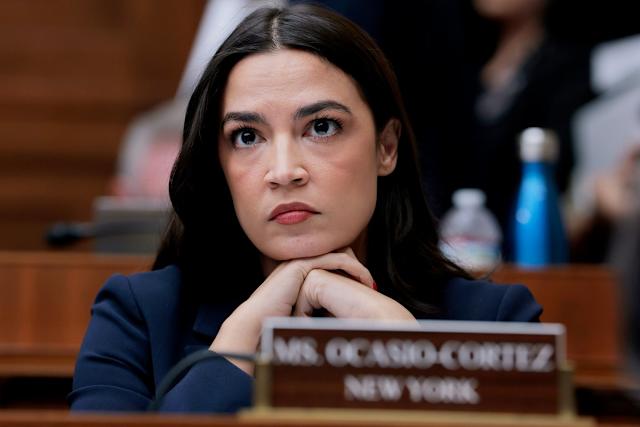
In past years, similar appeals had explicitly partnered with nonprofit organizations, detailing the number of families served and providing clear avenues for donors to contribute to tangible aid efforts.
The structure, tone, and imagery of this year’s email closely mirrored those prior campaigns, creating an expectation that donations would similarly support hunger relief.
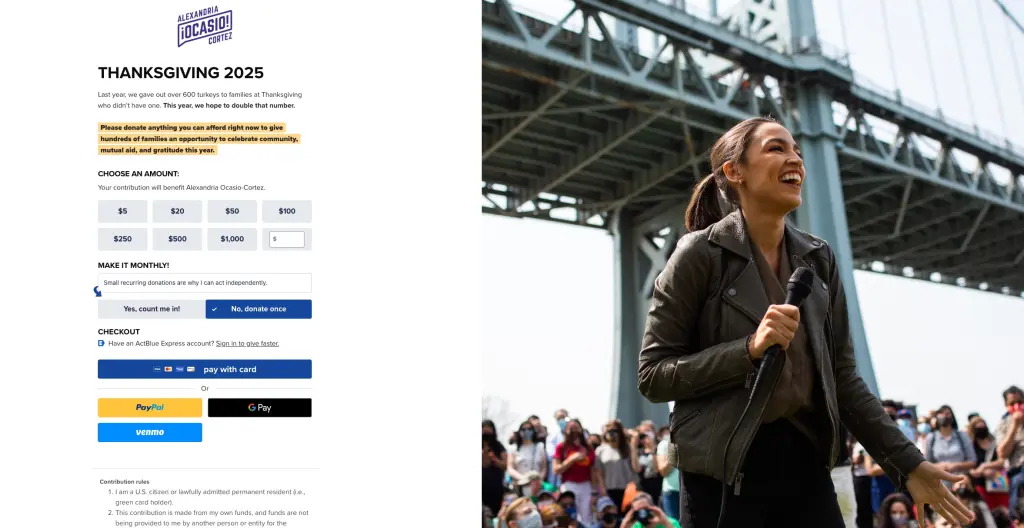
However, the mechanics of this year’s campaign differed in a significant and subtle way. Supporters who clicked the donation link in the email were directed to ActBlue, a widely used platform for Democratic campaign fundraising.
Contributions made through this link were explicitly credited to “Alexandria Ocasio-Cortez for Congress”, with no prominent or easily identifiable reference to a separate charitable organization. There was also no clear disclosure separating campaign fundraising from holiday food assistance.
While the email described the initiative in terms of providing meals to families, the ultimate destination of the donations was political, sparking concerns among donors and ethics observers alike.
Legal and Ethical Questions Arise
The blending of charitable language with political fundraising has raised both legal and ethical questions. U.S. campaign finance regulations strictly govern how political campaigns may solicit and use donations, requiring transparency and clear disclosure to avoid misleading the public.
In this case, the use of emotive imagery and holiday-themed messaging, traditionally associated with charitable appeals, has prompted debate over whether donors were given adequate information about where their money would go.
While regulators may eventually review the fundraising campaign for compliance with federal campaign finance laws, the broader ethical discussion has already begun. Critics argue that even if the campaign technically adhered to disclosure requirements, the emotional framing of the appeal — depicting families in need and invoking the generosity of the Thanksgiving season — may have misled supporters into believing their contributions would directly provide meals or groceries.
Trust and Donor Expectations
For many donors, the primary concern is trust. Giving during the holidays is often motivated by a desire to make an immediate and tangible difference in the lives of those facing hardship. When charitable imagery and political solicitation are blended, the lines between altruism and partisanship become blurred, potentially undermining confidence in both nonprofit fundraising and political contributions.
Consumer advocacy groups have highlighted the importance of clarity and transparency in fundraising communications. They urge individuals who wish to support hunger relief to donate directly to established, reputable charities, such as local food banks, the Food Bank For New York City, or national organizations like Feeding America, ensuring that contributions are used for their intended purpose.
At the same time, political campaigns are encouraged to clearly communicate the destination and purpose of donations, avoiding the use of emotionally charged imagery unrelated to the campaign’s objectives.
Criticism and Public Response
Media coverage of the fundraising email quickly drew public attention. Headlines in major outlets described the situation as a “Thanksgiving turkey drive controversy” and highlighted the tension between holiday goodwill and political fundraising. Social media platforms amplified the discussion, with donors and critics debating whether the campaign had crossed an ethical line.
Some defenders of the campaign argued that supporters are generally aware of ActBlue’s association with political fundraising and that the contributions were fully legal. However, the juxtaposition of charitable messaging and political solicitation, especially during a season historically associated with generosity, has fueled skepticism about the intentions behind such appeals.
Critics contend that campaigns leveraging emotive appeals connected to hunger relief risk eroding public trust. By presenting the campaign in the visual and emotional language of a food drive, without explicit clarification about how donations would be allocated, supporters may have been unknowingly directed to support partisan objectives rather than charitable aid.
Broader Implications
The controversy surrounding this fundraising appeal underscores a larger conversation about the intersection of politics and philanthropy. The use of emotionally compelling narratives — families in need, children receiving holiday meals — is a common tactic in nonprofit fundraising, but when these narratives are applied to political campaigns without clear disclosure, it can generate confusion, controversy, and reputational risk.

Ethics experts note that the issue is not necessarily one of illegality but rather of perception and transparency. When donors are presented with appeals that closely resemble charitable initiatives, they may assume their money is helping families in tangible ways, when in fact it is directed toward political campaigns. This divergence between expectation and reality can lead to public backlash, negative media coverage, and increased scrutiny from regulators.
As news of the Thanksgiving fundraising email spread, the reaction from donors and the public was swift and largely polarized. Supporters who clicked the donation link expecting to contribute to food relief for struggling families expressed surprise and frustration upon learning that their contributions went directly to “Alexandria Ocasio-Cortez for Congress” via ActBlue.
Donor Reactions and Confusion
Many donors reported feeling misled, describing the email as emotionally compelling yet lacking in transparency. Social media posts and online forums reflected a mixture of disappointment, confusion, and ethical concern. One donor, who asked not to be named, told a local news outlet, “I thought I was helping feed families this Thanksgiving. Instead, my donation ended up in a campaign account. That’s not what I signed up for.”
Other supporters expressed skepticism about whether the campaign intentionally blurred the lines between charitable messaging and political fundraising. Critics argued that such campaigns exploit the emotional vulnerability of individuals during the holiday season, potentially undermining trust in both nonprofit and political fundraising efforts.
Conversely, some defenders of the campaign pointed out that ActBlue is widely known as a platform for Democratic political fundraising and that donors may bear some responsibility for understanding where their contributions are going. They also noted that the appeal did not explicitly claim that the funds would be used exclusively for food assistance, though critics argue that the emotional framing made such an interpretation natural.

Historical Context and Campaign Practices
The controversy drew comparisons to previous holiday fundraising efforts from the Ocasio-Cortez campaign. In past years, holiday appeals were more explicitly tied to nonprofit partners, with clear communication regarding the number of families served, the organizations involved, and the intended impact of donations.
Donors were able to see the tangible results of their contributions, such as turkeys distributed to local food banks or monetary support directly funding community programs.
This year’s appeal, by contrast, retained the emotional imagery of food drives but redirected funds entirely to campaign operations, creating a disconnect between donor expectations and actual allocation. Experts in political ethics suggest that such approaches, even if legally compliant, can damage public perception and erode trust in both political organizations and charitable efforts during the holiday season.
Legal and Ethical Perspectives
Campaign finance experts have noted that the use of nonprofit-style messaging to solicit political contributions occupies a legally gray area. Federal election regulations require campaigns to disclose the recipient of donations clearly, and political fundraising emails must not falsely represent the purpose of contributions. While regulators have not yet opened an investigation into this particular email, the ethical questions remain significant.
Legal analysts emphasize that campaigns must maintain transparency to avoid accusations of misleading donors. Even if the solicitation technically complies with disclosure requirements, the use of emotive charitable imagery in political fundraising can be considered misleading in spirit, if not in letter. Ethics specialists suggest that campaigns should separate political messaging from charitable appeals entirely or provide clear, unambiguous disclosure about the use of funds.
Expert Recommendations for Donors and Campaigns
Consumer and donor advocacy groups recommend that individuals who wish to support charitable causes, particularly during holidays like Thanksgiving, donate directly to established charities. Organizations such as Feeding America, local food banks, and nonprofit programs dedicated to hunger relief offer transparent reporting on how contributions are used and provide assurance that funds go directly to those in need.
Similarly, political campaigns are encouraged to practice full transparency in fundraising efforts. This includes clearly stating that donations support campaign operations, separating emotional appeals tied to social causes from political solicitation, and avoiding the use of imagery or language that implies a charitable purpose when none exists. Such practices protect both donors and campaigns by building trust and reducing reputational risk.
Public Discourse and Broader Implications
The controversy has prompted a broader conversation about the intersection of politics and philanthropy, particularly during emotionally charged periods such as Thanksgiving. Many observers worry that blurring the line between charitable giving and political fundraising could contribute to growing public cynicism toward both sectors.
Journalists and commentators have highlighted the potential risks of such campaigns. By leveraging the emotional appeal of holiday generosity, political organizations may inadvertently undermine the credibility of legitimate charitable initiatives. Similarly, donors may become hesitant to contribute to either cause, fearing that their contributions will be misallocated or misrepresented.
On social media, the debate has sparked discussions about ethical fundraising practices and the importance of informed consent. Users have called for greater transparency in campaign emails and for clearer guidance on distinguishing between donations intended for charitable versus political purposes.
Lessons Learned and Moving Forward
The Thanksgiving fundraising controversy illustrates the need for clarity, accountability, and ethical communication in both nonprofit and political fundraising. For donors, the key takeaway is to verify the destination of donations and to seek out organizations with clear reporting and measurable impact. For political campaigns, the incident serves as a reminder that emotional appeals must not create misleading impressions about the use of funds.
Ultimately, this situation underscores the delicate balance between leveraging emotional engagement to drive support and maintaining ethical integrity. Donors expect transparency, and campaigns are responsible for providing it. Missteps in this balance can result in public backlash, legal scrutiny, and long-term damage to trust and reputation.
Conclusion
The 2025 Thanksgiving fundraising email associated with Alexandria Ocasio-Cortez highlights a modern challenge in the overlapping worlds of politics and philanthropy.
While holiday giving evokes generosity and goodwill, campaigns must exercise caution in crafting messaging that could be misinterpreted. Donors, for their part, are advised to remain vigilant, ensuring that their contributions achieve the intended impact.
By examining donor reactions, historical context, and the ethical implications of this campaign, it becomes clear that transparency and honesty are essential in any fundraising initiative.
Whether contributing to charitable causes or supporting political candidates, individuals must have confidence that their donations are used responsibly and as advertised. Only through careful adherence to these principles can campaigns maintain public trust and continue to engage supporters effectively during emotionally significant periods like Thanksgiving.