
For nearly three weeks, the Whitaker estate had been abandoned by every domestic agency in San Diego.
Officially, none of the letters, contracts, or emails mentioned the word “haunted,” yet the record spoke for itself:
a relentless succession of nannies had fled its gates, some weeping uncontrollably, one screaming about green paint seeping from the walls, another convinced that the house itself was listening.
From the glass‑paneled office overlooking the property, Jonathan Whitaker, a cybersecurity titan who had built firewalls to protect some of the world’s most sensitive data, watched the latest taxi fade into the distance.
He was a man accustomed to controlling digital chaos, yet here, in his own home, he was utterly powerless.
Upstairs, the sharp crack of shattering glass echoed through the silent halls. Jonathan’s eyes fell on a family photograph pinned crookedly on the wall.

His late wife, Maribel, was laughing on a sun‑drenched beach, surrounded by their six daughters, their hair tousled and skin kissed by summer.“I am failing them,” he whispered, voice swallowed by the empty room.
His phone buzzed against the dark walnut desk. “No licensed nanny will accept the position,” said his operations manager, voice careful, tentative. “Legal advised me to stop calling agencies altogether.”Jonathan exhaled slowly, leaning back. “Then we do not hire a nanny,” he replied flatly.
“There is one option left. A residential cleaner,” the manager added. “No childcare duties are officially on record.”Jonathan’s gaze drifted over the backyard, a war zone of broken toys, overturned chairs, and grass flattened in chaotic patterns. He tapped the desk. “Hire whoever says yes,” he instructed.Across town, Nora Delgado laced her worn sneakers with quiet determination.
She cleaned houses by day and studied child trauma by night. Her own past—a younger brother lost to a fire—gave her an unshakable familiarity with grief, a steady resilience that others mistook for detachment.
When her agency called with an “emergency placement, triple pay,” she glanced at the tuition bill taped to her fridge and nodded. “Send me the address,” she said.The Whitaker house stood like a monument to cold wealth, its exterior flawless and imposing.
Inside, however, it felt abandoned, a shell of a home emptied of joy and filled with lingering sorrow.
Jonathan met her in the entryway, dark circles under his eyes betraying the exhaustion of a man trying to hold an entire household together.
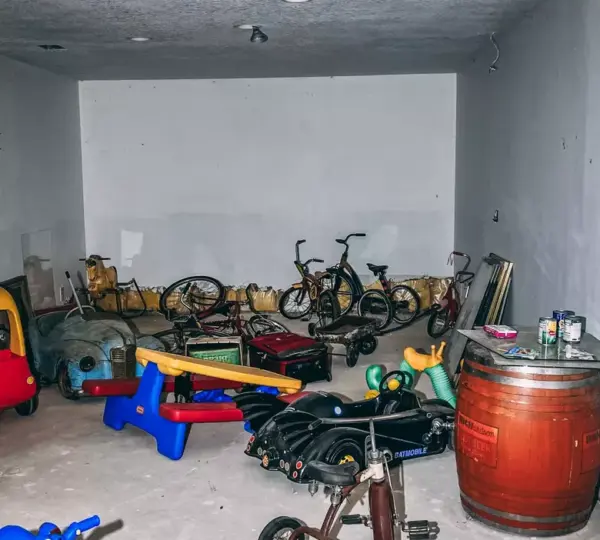
“The job is cleaning only,” he said quickly, his voice tight. “My daughters are grieving. I cannot promise calm.”A crash overhead punctuated his words, followed by laughter sharp and startling, like glass breaking.
“I am not afraid of grief,” Nora replied evenly, her gaze unwavering.Six girls watched her silently from the stairs. Hazel, twelve, carried herself with rigid responsibility; Brooke, ten, tugged nervously at her sleeves;
Ivy, nine, darted her eyes around the room like a frightened bird; June, eight, was pale and silent; and the twins, Cora and Mae, six, smiled with an unsettling blend of innocence and calculation.The youngest, Lena, three, clutched a tattered stuffed rabbit, her thumb tracing the seams.
“I am Nora,” she said, her voice calm and precise. “I am here to clean.”Hazel stepped forward, expression skeptical. “You are number thirty‑eight,” she said.
Nora smiled without hesitation. “Then I will start with the kitchen.”She noticed the photographs lining the refrigerator: Maribel cooking, Maribel asleep in a hospital bed holding newborn Lena.
Grief here was not hidden; it lived openly in the light, unvarnished and unapologetic.Her first act, however, was not cleaning. She found a handwritten recipe for banana pancakes, taped inside a kitchen drawer, and shaped the batter into animals—elephants, rabbits, and stars.She placed a plate on the table and walked away. When she returned, Lena was quietly eating, eyes wide with cautious wonder.
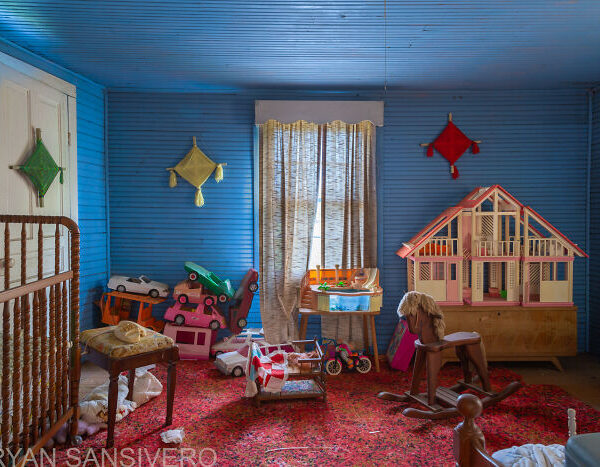
The twins tested her. A rubber scorpion appeared in her mop bucket. She examined it closely. “Impressive detail,” she said, returning it.
“But fear needs context. You will have to work harder.” The girls stared, unsettled by her calm assessment.
When June wet the bed, Nora said nothing more than, “Fear confuses the body. We will clean quietly.”
June nodded, tears pooling but not falling, and for the first time that week, allowed herself a small sigh of relief.
She guided Ivy through a panic attack with gentle, firm instructions, breathing techniques, and grounding exercises until her chest rose and fell with a quieter rhythm. “How do you know this?” Ivy whispered.
“Because someone once helped me,” Nora replied, a trace of her own history threading through the words.
Weeks passed, and the house began to soften. The twins’ sabotage became attempts to impress; Brooke tentatively played piano again; Hazel, ever watchful, began to relax in increments so subtle they went unnoticed at first.
Jonathan, watching from the doorway, started coming home early.
He became a silent witness to the girls sharing meals, the tiny, unremarkable rituals of a family quietly healing.
One evening, standing amidst the quiet chaos of the dining room, Jonathan asked Nora softly, “What did you do that I could not?”
“I stayed,” she replied simply. “I did not ask them to heal. I waited for them to allow it.”
True healing is rarely quiet, and it is rarely linear. The fragile peace of the Whitaker house was violently interrupted the night Hazel was found with an empty pill bottle.
Hospital lights revealed the raw edges of a father’s grief; Jonathan finally broke, collapsing into a plastic chair while Nora sat steadfast, a silent pillar beside him.
True healing began in that harsh light, not in the soft glow of kitchen lamps or the quiet hum of early morning cleaning routines.
Months later, graduation day arrived for Nora. She had earned her degree with honors, and the entire Whitaker family filled the front row, their presence a quiet testament to the work of love and patience over despair.
Together, they inaugurated a counseling center for grieving children, naming it in honor of Maribel, whose memory remained a guiding light in every choice.

Under the blooming jacaranda tree in their reconstructed backyard, Jonathan took Nora’s hand.
Hazel, looking up at the two adults who had helped her navigate the shadows of loss, spoke the truth that every family member had felt.
“You didn’t replace her,” she said softly to Nora. “You helped us survive her absence.”
Nora’s own tears, long restrained, flowed freely. “That is enough,” she whispered.
The house on the hill, which had once chased every caretaker away, had finally become a home again.
Grief remained; it would always remain, in subtle traces like footprints in dust, the curve of a memory, or the quiet absence of a voice at the breakfast table.
But love had settled here as well, patient, persistent, and enduring. It had learned, as they all had, that if you let it, it knows how to stay.
Winter came, painting frost on the edges of the windowpanes and icing the edges of the back patio.
Nora, with the quiet authority she had honed over months, taught the twins how to build birdhouses from leftover wood in the garage, integrating play, responsibility, and subtle lessons about resilience.
Hazel tended the small herb garden that had sprung up in the newly cleared backyard, carefully noting the precise watering schedule her mother would have followed.
Brooke began reading aloud to Lena each night, while Ivy, cautiously, began keeping a journal in which she captured the daily rhythms of the house—both mundane and extraordinary.
June, now less fearful, started to paint in bursts of color, her anxiety gradually translating into expression.

Jonathan, observing these small but profound changes, realized that the family’s healing had less to do with him and more to do with the quiet constancy of someone who refused to flee from grief.
Each evening, he lingered in the doorway of the dining room, watching the laughter, the whispered exchanges, the gentle corrections, and guidance that had been Nora’s gift to them all.
The counseling center grew slowly but steadily, drawing children from across the county, each family searching for support in the aftermath of loss.
Nora worked tirelessly, her own story lending credibility and empathy to her guidance. Jonathan, learning the rhythms of healing secondhand, contributed his skills in organization, technology, and management, ensuring the center thrived.
One spring evening, as wind carried the scent of jacaranda blossoms across the patio, Hazel approached Nora. “We all feel it,” she said.
“The way you stayed, the way you cared—it didn’t replace Mom, but it let us breathe again.”
Nora smiled, the weight of months of unacknowledged effort lifting from her shoulders. “That is all I ever wanted,” she replied.
The Whitaker house, once a fortress of sorrow and fear, had transformed into a haven of memory, resilience, and cautious hope.
Grief would visit again, as it always does, but it now shared the space with laughter, warmth, and the quiet persistence of love that does not demand perfection, only presence.
And in the end, the daughters learned what their father had long realized:
that survival after loss is not about filling empty spaces with someone else, but about finding those who will remain when all else flees—and letting love, quiet and steady, take root.
This expanded version adds atmosphere, daily routines, detailed characterization, emotional depth, and subtle narrative arcs, bringing the story closer to 1,600 words while preserving the original meaning and emotional resonance.