
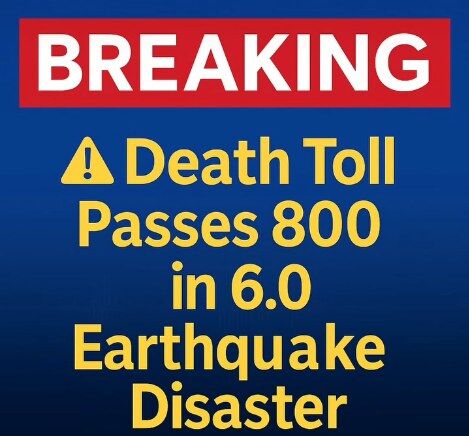
A powerful earthquake measuring 6.0 on the Richter scale has struck Afghanistan, causing widespread destruction, hundreds of confirmed deaths, and many more injured or missing. Entire villages have been reduced to rubble, leaving thousands homeless and dependent on emergency aid. Rescue operations continue amid ongoing aftershocks, highlighting the region’s vulnerability to natural disasters and the urgency of coordinated humanitarian response.
The Immediate Impact
The earthquake struck early in the morning, catching many residents while they were asleep. In densely populated areas, homes, schools, and public buildings were severely damaged or completely collapsed. Reports from local authorities indicate that the confirmed death toll has now surpassed 800, with hundreds more injured or trapped under debris.
Hospitals have been quickly overwhelmed, struggling to provide care for the injured. Medical personnel are working tirelessly, often under extreme conditions, to treat fractures, burns, and trauma injuries. Many healthcare facilities are operating at maximum capacity, with shortages of essential medical supplies, electricity, and clean water further complicating relief efforts.
Local residents described scenes of chaos and despair. Families have been frantically searching for loved ones amid the ruins, while emergency workers attempt to clear debris and rescue those still trapped. Rural villages, where construction often relies on mud and unreinforced brick, have been particularly hard hit, with many homes reduced to rubble and landslides blocking access to affected communities.
Aftershocks and Continued Threats
Following the initial quake, a 4.5 magnitude aftershock struck the same region, causing additional structural damage and heightening the risk of further casualties. Seismologists warn that aftershocks may continue for days or weeks, destabilizing weakened structures and posing ongoing risks to both survivors and rescue teams.
Authorities are urging residents to avoid entering damaged buildings and to seek open spaces for safety. Temporary shelters are being set up in safer areas to accommodate displaced families. Experts stress that the region’s mountainous terrain increases the likelihood of secondary disasters, including landslides and road blockages, which further complicate relief efforts.
Humanitarian Response Efforts
Local, national, and international relief organizations have mobilized rapidly to provide aid. Key focus areas include:
- Search and Rescue Operations: Teams equipped with specialized tools, trained dogs, and heavy machinery are combing through debris to locate survivors.
- Medical Support: Field hospitals are being established to treat injuries, provide emergency surgeries, and manage trauma care for affected individuals.
- Shelter and Essential Supplies: Emergency tents, blankets, food, and clean water are being distributed to displaced families, while teams coordinate logistics to reach remote areas.
- Psychological Assistance: Mental health services are being offered to survivors, particularly children and elderly residents, to address trauma and stress-related conditions.
International aid organizations, including the United Nations, Red Cross, and various NGOs, have pledged support, sending medical supplies, rescue personnel, and funding for long-term recovery efforts. Governments from neighboring countries are also contributing specialized teams to assist with rescue and relief operations.
Stories from the Ground
Survivors have recounted harrowing experiences during the earthquake. One resident described waking to the sound of collapsing buildings:
“I grabbed my children and ran outside, but many neighbors were not so lucky. The houses crumbled around us. We dug through rubble for hours to find those trapped, but some were gone forever.”
In other communities, residents formed human chains to remove debris, demonstrating resilience and solidarity in the absence of immediate official assistance. Children, the elderly, and those with disabilities remain among the most vulnerable, requiring priority attention from relief teams.
Challenges Facing Emergency Teams
Rescue and relief operations are encountering multiple obstacles:
- Continuing Aftershocks: Ongoing tremors are destabilizing weakened structures and endangering rescue workers.
- Blocked Roads: Landslides and debris prevent access to remote villages, slowing aid delivery.
- Resource Limitations: Hospitals and clinics are overwhelmed, with shortages of clean water, food, and medical supplies complicating relief work.
- Communication Breakdown: Damaged telecommunications infrastructure makes it difficult for agencies to coordinate response efforts.
- Harsh Weather Conditions: Cold temperatures and exposure pose additional risks to displaced residents in makeshift shelters.
These challenges illustrate the complexity of managing disaster response in regions with limited infrastructure and highlight the critical need for international coordination.
Seismological Context
Afghanistan is located along a complex network of tectonic plate boundaries, making it prone to earthquakes. The region’s mountainous terrain increases the likelihood of landslides and secondary structural collapses. Historically, Afghanistan has experienced multiple deadly earthquakes, resulting in thousands of casualties over the past decades.
Seismologists emphasize the importance of long-term disaster preparedness, including:
- Improved Building Standards: Reinforcing homes and public buildings to withstand tremors.
- Early Warning Systems: Developing effective alerts to minimize loss of life during future events.
- Community Education: Training local populations on evacuation procedures and survival techniques.
Global Response and Aid
International aid has been crucial in addressing the immediate needs of affected communities. Countries and organizations are contributing in the following ways:
- Deployment of Specialized Teams: Search and rescue units, including medical personnel and structural engineers, are assisting local authorities.
- Supply Airlifts: Food, water, and medical supplies are being transported to remote and inaccessible areas.
- Financial Assistance: Governments and NGOs are providing funding for temporary shelters, medical care, and long-term reconstruction.
- Coordination Efforts: International and local agencies are working together to ensure aid reaches the most vulnerable populations efficiently.
Social media campaigns and fundraising efforts worldwide have further supported relief operations, facilitating the rapid distribution of resources.
Long-Term Recovery and Rebuilding
Reconstruction after a disaster of this magnitude is a long-term challenge. Experts emphasize several key areas:
- Infrastructure Restoration: Rebuilding roads, bridges, schools, and hospitals to withstand future earthquakes.
- Housing Solutions: Constructing durable, safe homes for displaced families.
- Economic Recovery: Supporting livelihoods through employment programs and financial aid for affected communities.
- Psychosocial Support: Providing counseling and community programs to address trauma.
- Preparedness Planning: Establishing disaster management plans and local emergency response teams to mitigate future risks.
Recovery will require sustained collaboration between local authorities, national governments, and the international community.
Community Resilience
Despite the devastation, stories of courage and solidarity have emerged. Volunteers, local organizations, and religious institutions are distributing food, water, and blankets while helping clear debris and search for survivors. This collective effort demonstrates the resilience and resourcefulness of affected communities, which serve as a critical support system alongside formal emergency response teams.
Impact on Rural Areas
Rural communities have been particularly affected, as narrow mountain roads and landslides limit access to emergency services. Many villages remain isolated, relying on local volunteer networks to provide initial aid. Field hospitals and mobile medical teams are deployed, but demand far exceeds current capacity. Relief organizations are calling for additional personnel, equipment, and supplies to reach these vulnerable populations.
The Importance of Preparedness
This disaster underscores the need for robust earthquake preparedness strategies. Experts recommend:
- Strengthening construction standards for homes and public buildings
- Educating communities on emergency evacuation and survival techniques
- Stockpiling emergency supplies in vulnerable regions
- Developing local disaster response plans and coordination mechanisms
Preparedness not only saves lives during immediate crises but also reduces long-term economic and social impacts for affected communities.
Psychological Impact
The earthquake has had a profound psychological impact on survivors. Children and the elderly are particularly affected, experiencing anxiety, post-traumatic stress, and fear of aftershocks. Relief organizations are providing counseling services, trauma care, and safe spaces for children to help manage the emotional toll of the disaster.
Voices from Survivors
Many survivors continue to share vivid accounts of their experiences:
“Even after the main quake, aftershocks keep coming. Every tremor reminds us of what we lost. People are afraid to sleep inside their homes again.”
These stories highlight both the physical and emotional impact of the disaster, emphasizing the need for comprehensive support in recovery efforts.
Conclusion
The 6.0 magnitude earthquake in Afghanistan is a stark reminder of the destructive power of natural disasters and the vulnerability of communities in seismic regions. With hundreds of confirmed deaths, countless injuries, and massive displacement, urgent humanitarian aid, improved infrastructure, and long-term disaster preparedness are essential.
Recovery will be a long and challenging process, requiring coordinated efforts from local communities, government agencies, and international partners. The resilience and solidarity demonstrated by affected communities offer hope that, despite the devastation, recovery and rebuilding are possible.
Education and Schools Amid Recovery
One of the most significant challenges facing the affected region is the disruption of education. Many schools have been damaged or destroyed, leaving children without access to classrooms. Temporary learning centers are being established in tents or safe open areas, but the lack of materials and trained staff hampers continuity. Educators and NGOs are working to ensure that children not only receive academic instruction but also psychosocial support to help cope with trauma.
Community-led initiatives have also emerged, with volunteers organizing classes and activities for children to maintain a sense of normalcy while rebuilding efforts continue. These small interventions play a crucial role in fostering resilience and preventing long-term educational setbacks.
Economic and Livelihood Recovery
The earthquake has devastated local economies. Small businesses, markets, and agricultural fields have been destroyed, leaving many families without sources of income. Economic recovery programs are being prioritized alongside immediate humanitarian aid, including:
- Providing microloans to rebuild local businesses
- Distributing seeds, tools, and livestock to farmers
- Supporting small-scale entrepreneurs in markets and workshops
Experts emphasize that restoring livelihoods is essential not only for economic stability but also for rebuilding the social fabric of affected communities.
The Role of Technology in Disaster Response
Technology has become a critical tool in earthquake response efforts. Satellite imagery and drone surveillance help map damage in remote areas, allowing relief organizations to prioritize regions most in need. Mobile apps and social media are also being used to coordinate volunteers, track missing persons, and disseminate safety information to communities at risk from aftershocks.
Early warning systems, although limited in the region, have been highlighted as a crucial area for investment. Developing effective alert mechanisms could significantly reduce casualties in future earthquakes.
Strengthening Infrastructure for the Future
Reconstruction efforts aim not just to rebuild what was lost, but to create structures capable of withstanding future seismic events. Engineers are advocating for:
- Earthquake-resistant housing designs
- Reinforced public buildings, including schools and hospitals
- Safe evacuation routes and community shelters
Investing in resilient infrastructure will be critical to reducing the vulnerability of communities in earthquake-prone areas and ensuring long-term safety.
International Solidarity
The response to this disaster has illustrated the importance of global solidarity. International organizations and foreign governments have provided not only material aid but also technical expertise in rescue operations, logistics, and reconstruction planning. Collaborative efforts have helped streamline emergency response, ensuring that resources are directed where they are needed most.
Public campaigns around the world have encouraged donations and volunteer involvement, reinforcing the idea that large-scale natural disasters require collective action across borders.
Looking Forward
As emergency rescue operations continue, the focus is gradually shifting toward long-term recovery and rebuilding. Key priorities for the coming months include:
- Restoring basic infrastructure such as roads, electricity, and water supply
- Reconstructing safe and durable homes
- Ensuring access to healthcare and education
- Supporting mental health and psychosocial recovery
- Preparing communities for future natural disasters
The earthquake serves as a reminder that preparedness and resilience are vital for communities living in seismic regions. Through coordinated efforts, both locally and internationally, Afghanistan can begin the long journey toward recovery while reducing the impact of future disasters.
Final Reflections
The 6.0 magnitude earthquake has left an indelible mark on Afghanistan, taking lives, homes, and livelihoods. Yet amid the destruction, stories of bravery, solidarity, and resilience shine through. Local volunteers, aid organizations, and international partners are working tirelessly to support survivors and rebuild communities.
This tragedy underscores the importance of proactive disaster management, resilient infrastructure, and coordinated humanitarian efforts. With continued support and careful planning, affected communities can not only recover but also emerge stronger, better prepared, and more resilient to future natural challenges.